Carverr’s DNA Barcodes Enable Farm-to-Table Food Tracing at Scale
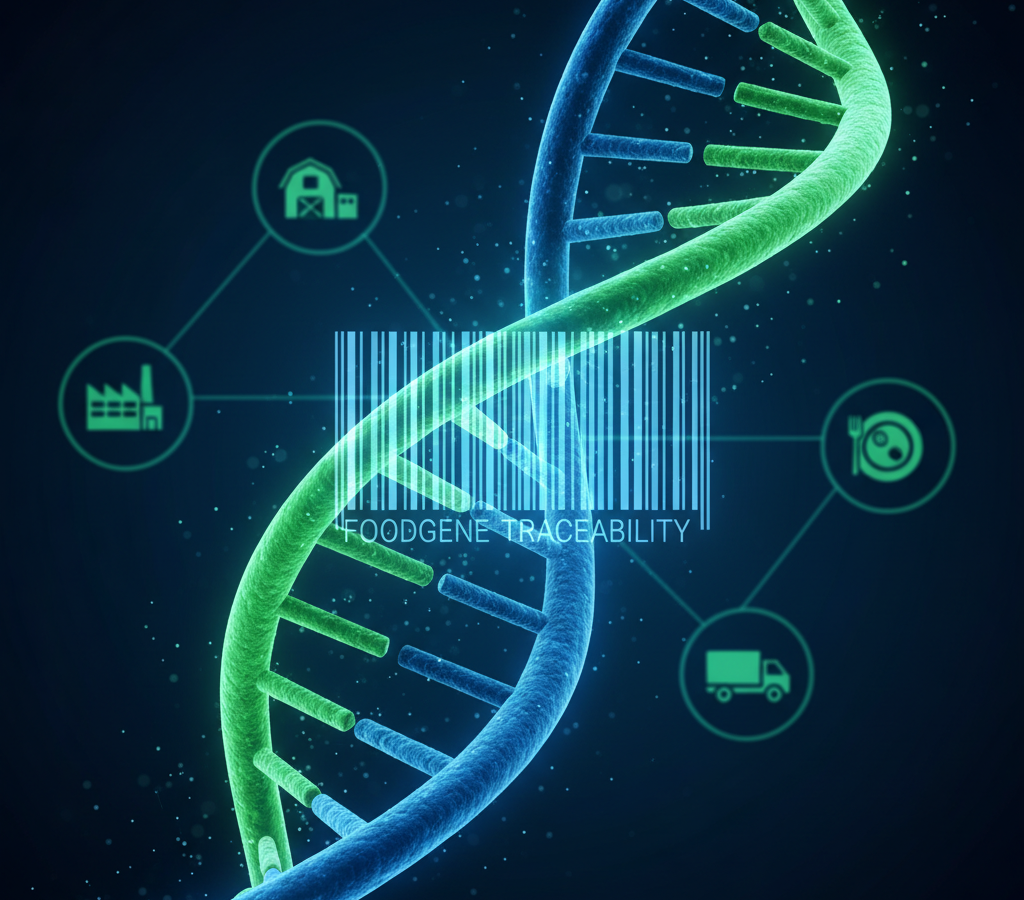
Carverr Technologies has achieved a breakthrough in food supply chain transparency with the commercial launch of its DNA barcode system, capable of tracing ingredients from origin to consumer plate. The Boston-based biotech company announced that its technology is now deployed across 47 food processing facilities in North America, marking a significant milestone in addressing food fraud and contamination risks.
How DNA Barcoding Works
Unlike traditional packaging labels or QR codes that can be easily falsified, Carverr’s system uses engineered microorganisms containing unique genetic signatures. These biological markers are added to food products during processing and remain stable throughout the supply chain, even surviving cooking temperatures up to 165°C.
“We’re essentially creating a biological passport for food,” explains Dr. Sarah Chen, Carverr’s Chief Science Officer. “Each batch of olive oil, coffee, or spices gets its own unique DNA sequence that can be verified at any point in the supply chain using a simple test kit.”
The technology addresses a $40 billion annual problem. Food fraud affects everything from honey (where up to 76% of products contain unlabeled additives) to olive oil, seafood, and organic produce. Traditional verification methods rely on documentation that can be altered or forged.
Early Adoption and Results
Three major food retailers have implemented Carverr’s system across their premium product lines. Early results show a 94% reduction in mislabeled products and a 67% decrease in contamination incidents. The system has already identified 23 cases of fraudulent organic certification and prevented an estimated $8.3 million in potential recalls.
The cost of implementation is surprisingly modest. Processing facilities pay approximately $0.02 per unit for the DNA barcode application, while verification test kits cost $12 each. For high-value products like imported olive oil or wild-caught seafood, this represents less than 0.3% of the retail price.
Regulatory Approval and Safety
The FDA granted Carverr’s DNA barcodes Generally Recognized as Safe (GRAS) status in October 2024 after extensive safety testing. The engineered microorganisms are derived from food-grade bacteria already present in fermented foods and are completely inactive—they cannot reproduce or transfer genetic material.
European regulators are expected to approve the technology by Q2 2026, opening access to a €450 billion market. Japan and Australia have fast-tracked their approval processes, recognizing the potential for combating seafood mislabeling.
Market Impact and Future Applications
Carverr has raised $67 million in Series B funding led by Khosla Ventures and Bill Gates’s Breakthrough Energy Ventures. The company projects revenue of $140 million by 2027 as adoption expands beyond premium products to mainstream grocery items.
Beyond food safety, the technology has potential applications in pharmaceutical supply chains, counterfeit prevention for luxury goods, and verification of sustainably sourced materials. Carverr is currently piloting a system for tracking ethically sourced cocoa in West Africa.
As supply chains grow increasingly complex and consumers demand greater transparency, biological authentication systems like DNA barcoding represent a fundamental shift in how we verify product authenticity. The technology proves that solutions inspired by nature’s own information encoding systems can solve modern supply chain challenges.