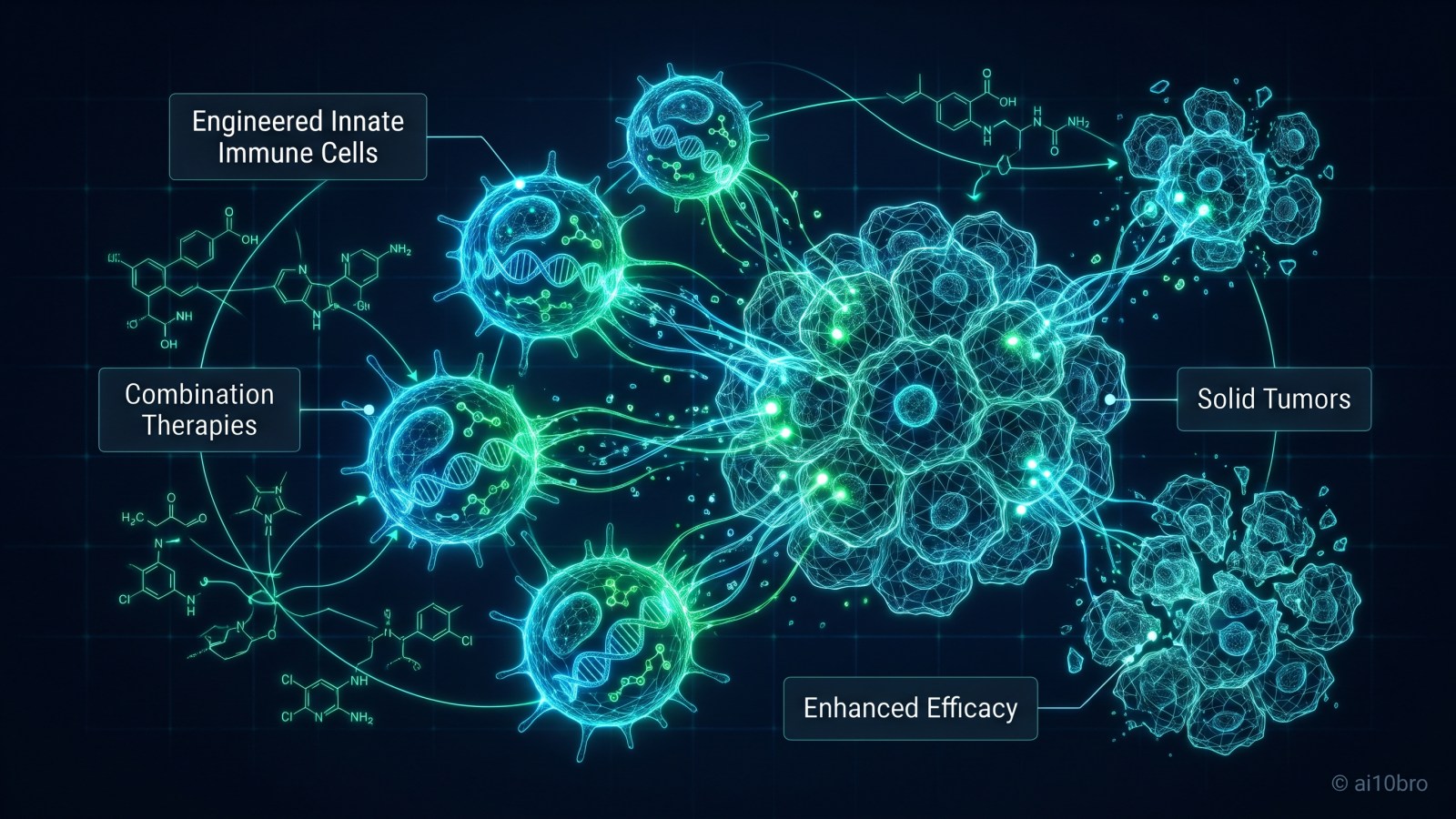
Researchers from various institutions have uncovered a promising new approach to fighting cancer by engineering innate immune cells such as natural killer (NK) cells and macrophages. This method shows significant potential when used in combination with traditional treatments like chemotherapy and radiotherapy.
Overview
The study, published in 2026 and authored by Atieh Raoufi, Yeganeh Khazaei, Naeimeh Shibaei, and Davood Jafari, synthesizes current preclinical and clinical evidence on genetically engineered innate immune cells. These cells have been shown to improve tumor recognition and cytotoxicity, making them a compelling alternative to T-cell-based therapies that often struggle with poor infiltration into solid tumors.
Context & Significance
This discovery matters significantly beyond the lab, as it addresses one of the major limitations in cancer immunotherapy: the difficulty of achieving effective treatment for solid tumors. The global market for cancer immunotherapy is expected to reach over $100 billion by 2030, making this a crucial development that could capture substantial commercial interest.
Traditionally, T-cell-based therapies have dominated the landscape of immune-oncology. However, their efficacy in solid tumors has been limited due to poor infiltration and strong immunosuppressive environments within these tissues. Engineered innate immune cells offer an alternative strategy that can potentially overcome these challenges by leveraging inherent tumor recognition capabilities.
How It Works
The mechanism of engineered innate immune cells involves genetically modifying them to enhance their ability to recognize and destroy cancerous cells. Key innovations include improving the cells’ homing potential towards tumors, boosting their cytotoxicity against cancer cells, and reshaping the tumor microenvironment to make it more conducive for immune cell activity.
Compared to prior work on T-cell-based therapies, this approach offers several advantages. For instance, innate immune cells do not rely on specific antigen recognition like T-cells, making them potentially effective across a wider range of cancer types. Moreover, these cells can be engineered to express certain receptors that enhance their ability to locate and destroy tumor cells.
Real-World Applications
The practical implications of this breakthrough are vast. Companies like Juno Therapeutics, Kite Pharma (now part of Gilead Sciences), and other biotech startups focused on cell therapy are likely to show significant interest in adopting these engineered innate immune cells for their pipelines.
From an economic perspective, the cost savings from improved treatment efficacy could be substantial. If successful, this approach could reduce the need for repeated rounds of chemotherapy or radiotherapy, which not only drives up healthcare costs but also imposes a heavy burden on patients’ quality of life.
What’s Next
The immediate next steps in commercializing this technology will involve addressing several key challenges. These include scaling up manufacturing processes to produce sufficient quantities of engineered innate immune cells, ensuring their safety and efficacy through rigorous clinical trials, and developing robust combination strategies with existing treatments.
Achieving regulatory approval will be critical for broader adoption, as will establishing clear cost-effectiveness metrics that can justify the investment required to bring this technology to market. Despite these hurdles, the potential of engineered innate immune cells in revolutionizing cancer treatment makes them a promising avenue worth exploring further.