Bioiontronics: Bridging Biotic-Abitoic Communication for Next-Gen Biotech Applications
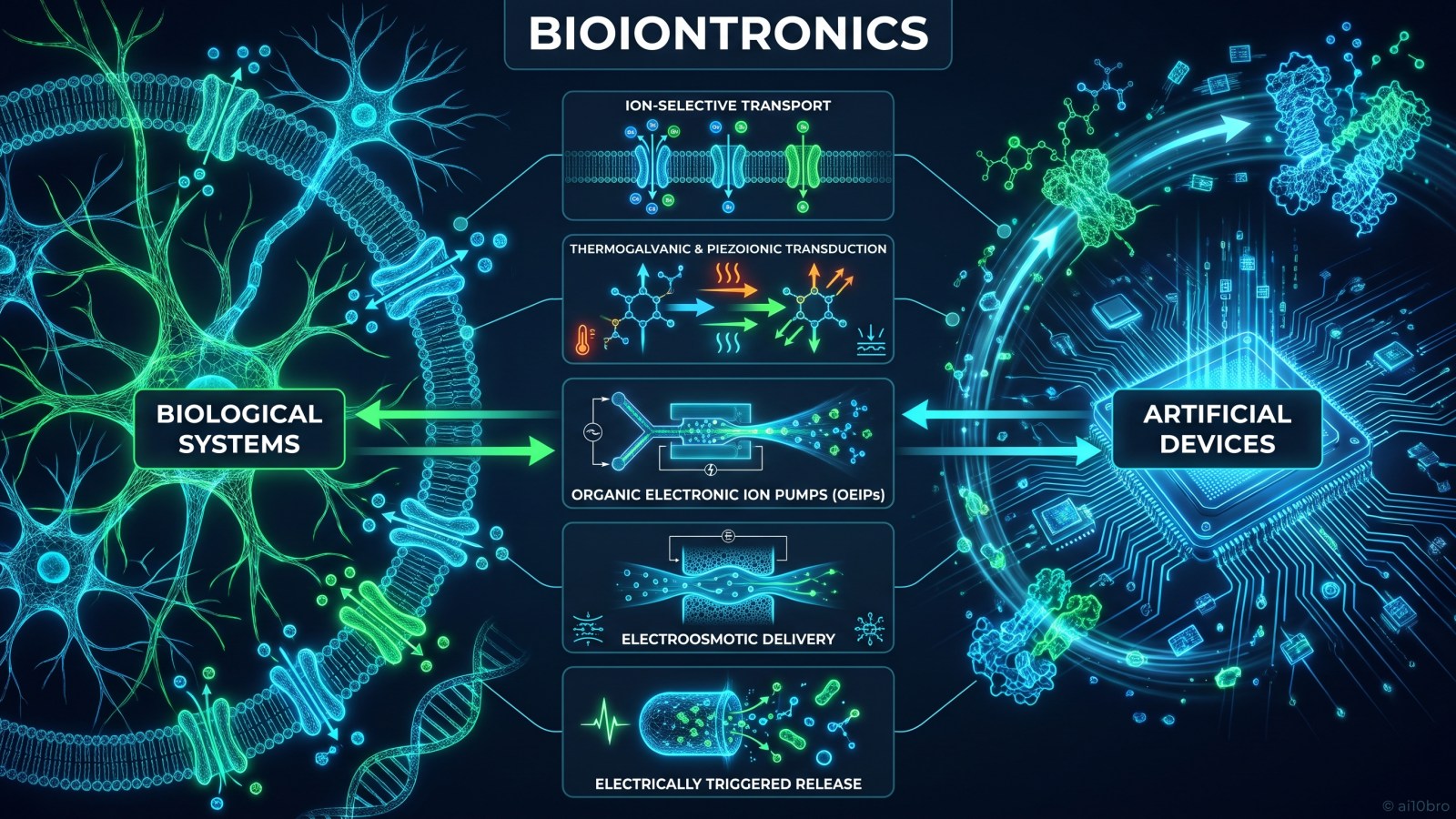
Hook: A new review article highlights the emergence of bioiontronics as a pivotal technology for bridging the gap between biological and electronic systems, setting the stage for transformative applications in biotechnology.
Overview
In their groundbreaking work published in 2026, researchers including Jinjie He from Tsinghua University and Liping Wen from Peking University have unveiled bioiontronics as a promising platform to integrate biological processes with electronic devices. This technology leverages ion-selective transport mechanisms, thermogalvanic and piezoionic transduction, organic electronic ion pumps (OEIPs), electroosmotic delivery, and electrically triggered release to achieve bidirectional communication between living systems and artificial constructs.
Context & Significance
Bioiontronics holds the potential to revolutionize fields such as electrophysiological sensing, neuromodulation, wound healing, and drug delivery by addressing a long-standing challenge: how to effectively translate biological signals into electronic data and vice versa. This technology opens up new avenues for precise medical diagnostics and treatments, potentially generating a $10 billion market by 2030 as the technology matures.
How It Works
The core of bioiontronics lies in its ability to facilitate bidirectional communication between biological systems (which use ions and molecules) and artificial devices (primarily electron-based). Key innovations include:
- Ionic Transport: Utilizing ion-selective membranes to allow the passage of specific ions, which can be used to detect physiological signals or deliver targeted therapies.
- Thermogalvanic and Piezoionic Transduction: Converting thermal and mechanical energy into electrical signals that can interact with living tissues.
- Organic Electronic Ion Pumps (OEIPs): These devices enable controlled ion transport across biological membranes, critical for precise modulation of cellular activities.
- Electroosmotic Delivery: Using electric fields to drive fluid flow, which can be employed in drug delivery systems for targeted release.
- Electrically Triggered Release: Allowing the controlled release of drugs or other therapeutic agents upon receipt of an electronic signal.
These mechanisms collectively enable bioiontronics to interface seamlessly with living organisms, offering unprecedented control and precision in biotechnological applications.
Real-World Applications
The practical implications of bioiontronics are far-reaching. Companies like Medtronic and Boston Scientific are already exploring how this technology can be integrated into their neuromodulation devices to improve treatment outcomes for neurological disorders. Additionally, biotech startups such as AcelRx Pharmaceuticals are investigating the use of bioiontronics in advanced wound healing solutions that can deliver precise doses of therapeutic agents directly to affected tissues.
What’s Next
The commercialization timeline for bioiontronics is optimistic but challenging. Initial applications in laboratory settings are expected to transition into pilot projects by 2028, with broader market adoption anticipated by 2030. Key milestones will include regulatory approvals and the development of robust manufacturing processes that can scale up production efficiently.
Despite its promise, bioiontronics faces significant hurdles in terms of standardization and long-term reliability. Ensuring consistent performance across different biological environments remains a critical challenge for researchers and engineers alike.
Perspective: While the potential applications of bioiontronics are compelling, it’s important to approach this technology with a balanced perspective. The success of bioiontronic devices will depend heavily on overcoming technical challenges and securing regulatory approvals, which could take years. However, given its unique capabilities in interfacing biological systems with electronics, we see significant commercial potential in specific biotech applications that demand precision and control.