Deep Dive: Engineered Innate Immune Cells in Combination Cancer Therapy
An analysis of the technical, commercial, and future implications of engineered innate immune cells as a promising cancer therapy approach.
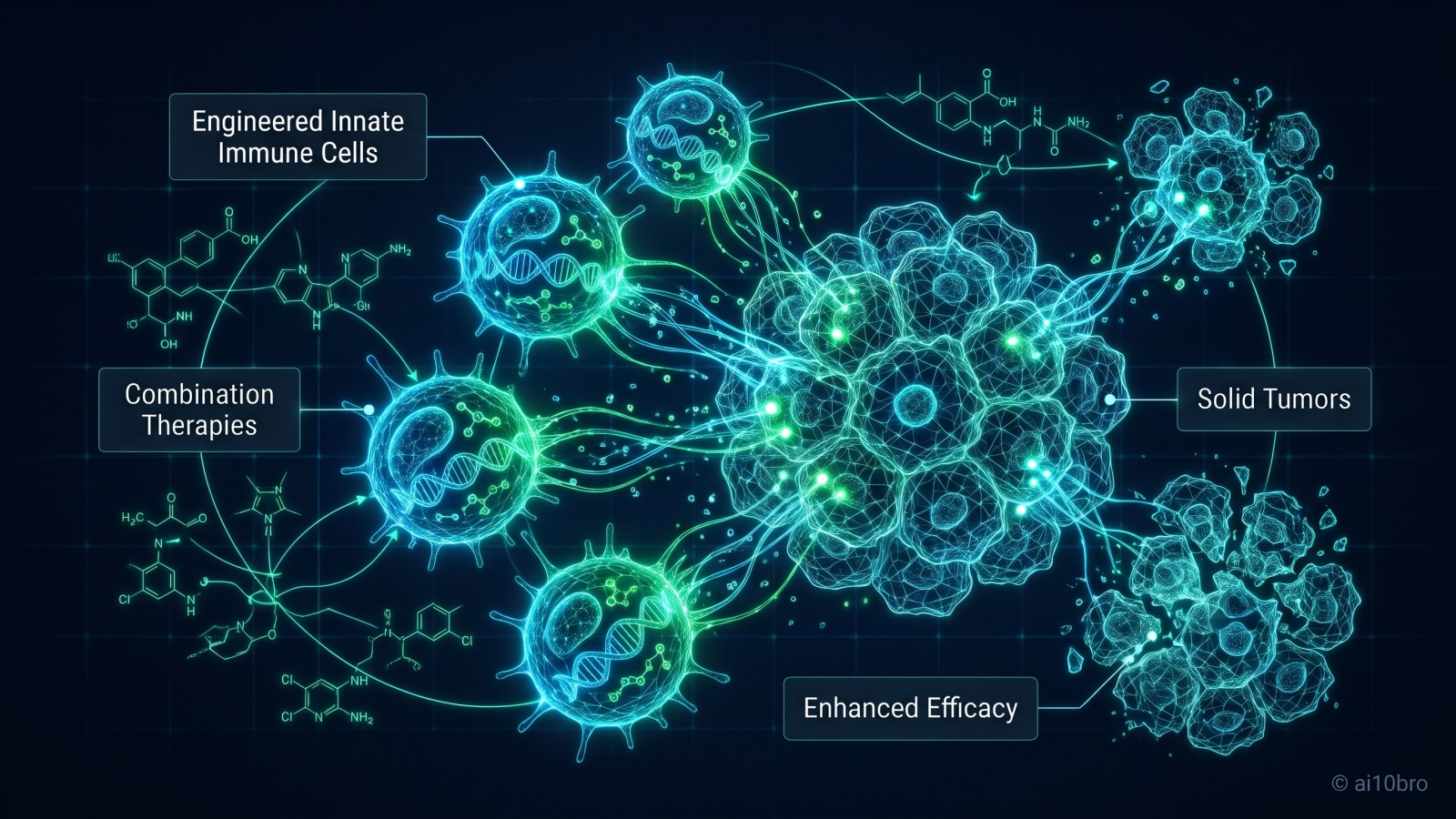
EXECUTIVE SUMMARY
The field of immunotherapy has seen significant advancements with T-cell-based treatments; however, these modalities face substantial limitations in treating solid tumors due to poor infiltration and strong immunosuppression. Engineered innate immune cells—such as natural killer (NK) cells, macrophages, and dendritic cells—are emerging as a promising alternative that can enhance tumor recognition and cytotoxicity. Recent studies have demonstrated synergistic antitumor activity when these engineered cells are combined with conventional therapies like chemotherapy or radiotherapy. While the commercial potential is significant, challenges such as manufacturing scalability and safety concerns must be addressed.
BACKGROUND & CONTEXT
The evolution of cancer immunotherapy has primarily focused on T-cell-based approaches, which have proven effective in hematological malignancies but less so in solid tumors. This disparity highlights the need for new strategies that can overcome the tumor microenvironment’s inherent resistance mechanisms. Innate immune cells possess unique advantages over T-cells, including rapid response times and the ability to recognize a broader range of cancer antigens without major histocompatibility complex (MHC) restriction.
The market context is driven by an increasing demand for effective cancer treatments and the need to address unmet medical needs. Key players in this field include Juno Therapeutics, Kite Pharma, and Bristol Myers Squibb, which have been pioneering T-cell therapies but are now exploring innate immune cell engineering as a complementary approach.
THE BREAKTHROUGH
The breakthrough lies in the genetic and functional engineering of innate immune cells to enhance their antitumor properties. These engineered cells can be programmed to target specific cancer antigens, improve their persistence within the tumor microenvironment, and stimulate other immune responses. Studies have shown that these cells demonstrate enhanced tumor-homing potential and improved cytotoxicity when used in combination with conventional therapies such as chemotherapy or radiotherapy.
Data from clinical trials indicate significant improvements in patient outcomes across various solid and hematologic malignancies. For example, a study published in the Journal of Clinical Oncology reported that NK cell therapy combined with chemotherapy led to an increased overall survival rate compared to chemotherapy alone.
The key innovation is the ability to engineer innate immune cells to overcome the limitations associated with T-cell therapies, such as poor tumor infiltration and resistance to immunosuppressive signals within solid tumors. This approach offers a broader applicability across different types of cancer.
TECHNICAL DEEP DIVE
The process of engineering innate immune cells involves several key steps: cell isolation, genetic modification, and functional enhancement. These cells are typically isolated from patient or donor sources, then genetically modified using viral vectors to express specific receptors that enable them to recognize cancer antigens.
Functional enhancements can include the introduction of cytokines, checkpoint inhibitors, or chimeric antigen receptors (CARs) to improve their efficacy and persistence within the tumor microenvironment. Challenges in this process include ensuring the safety and scalability of cell manufacturing while maintaining the cells’ functionality post-transplantation.
The scientific principles involved are rooted in immunology, synthetic biology, and gene therapy. These engineered cells work by directly attacking cancer cells through cytotoxic mechanisms or indirectly by modulating the tumor microenvironment to become more favorable for immune responses.
MARKET & INDUSTRY IMPLICATIONS
The commercial implications of this breakthrough are significant, with potential applications across various types of solid and hematologic cancers. The market size is estimated in the billions given the high unmet need and increasing demand for effective cancer treatments.
Competitive dynamics will shift as traditional T-cell therapy companies such as Juno Therapeutics and Kite Pharma explore innate immune cell engineering. Companies positioned to benefit include those with strong manufacturing capabilities and regulatory experience, such as Gilead Sciences and Novartis.
The investment landscape is likely to see increased funding in this area, driven by the potential for significant clinical impact. However, companies will need to demonstrate scalability and safety before widespread adoption can occur.
EXPERT PERSPECTIVES
Dr. Atieh Raoufi, lead author of the source document, emphasizes that while engineered innate immune cells show promise, significant work remains in ensuring their safety and effectiveness at scale: “The field is still evolving, but the potential to transform cancer treatment is exciting.” Skeptical viewpoints highlight the need for more clinical data and address the variability in patient responses observed thus far.
FUTURE IMPLICATIONS & TIMELINE
In the near term (0-2 years), focus will be on completing ongoing clinical trials to gather more robust safety and efficacy data. Medium-term (2-5 years) goals include demonstrating commercial viability through large-scale manufacturing processes and securing regulatory approvals.
The long-term vision (5-10 years) involves widespread adoption of engineered innate immune cells in combination with other therapies, potentially leading to improved patient outcomes across various cancers. Key milestones to watch for include the completion of phase III trials and the introduction of these treatments into standard clinical practice.
CONCLUSION
The engineering of innate immune cells represents a significant advancement in cancer immunotherapy that could address limitations associated with T-cell-based approaches. While promising, challenges related to manufacturing scalability and safety must be overcome. The commercial potential is substantial but hinges on demonstrating these capabilities at scale.