Overview
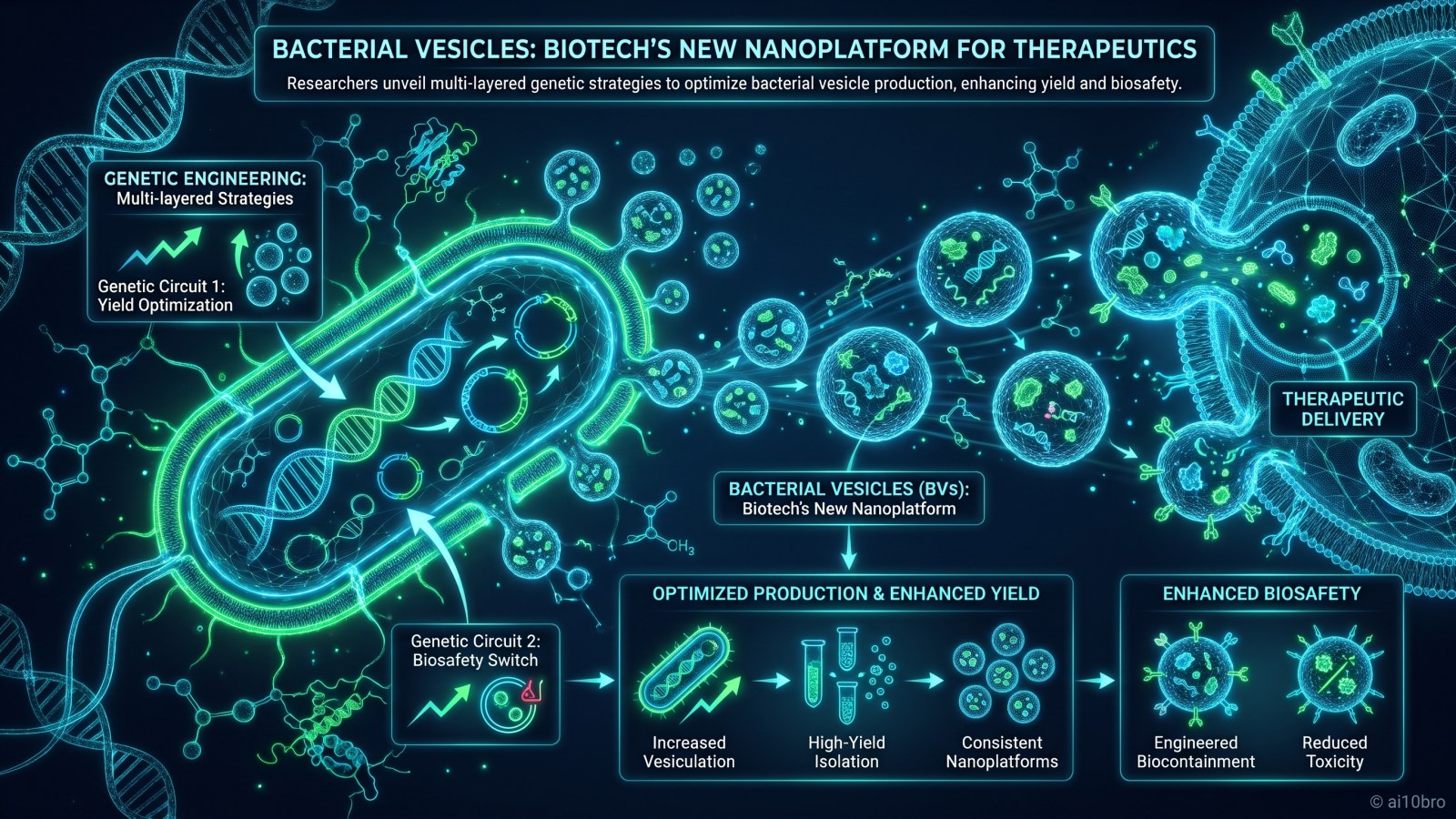
In a breakthrough study published in PubMed, researchers Joo Yeon Lee, I Sak Yang, and Seung Min Yoo from Korea have unveiled advanced genetic strategies to optimize the production of bacterial outer membrane vesicles (OMVs). OMVs are nanoscale structures with significant potential for biomedical applications such as drug delivery and vaccine development. This research addresses key limitations in OMV yield and stability, paving the way for scalable biomanufacturing.
Context & Significance
The global market for OMVs is expected to reach $5 billion by 2030, driven by increasing demand for targeted drug delivery systems and vaccine technologies. Traditional methods of producing OMVs have been constrained by low yields and issues with host cell stability. The novel genetic strategies proposed in this study can significantly enhance OMV production efficiency while maintaining biosafety, thus opening new opportunities for industrial-scale biomanufacturing.
These advancements address a critical bottleneck that has hindered the broader commercial adoption of OMVs. By improving both yield and cellular fitness, researchers are laying the groundwork for more cost-effective and scalable manufacturing processes, which will be crucial as the market grows.
How It Works
The study introduces a multi-layered approach to genetic engineering that targets four biophysical dimensions:
- Outer membrane layer remodelling: Altering the lipid composition and protein content of OMVs can improve vesicle stability without compromising yield.
- Periplasmic waste accumulation and turgor stress: Reducing periplasmic congestion helps prevent cellular lysis, a common issue in high-yield strains. Optimizing the balance between internal pressure and membrane integrity is crucial.
- Outer membrane-peptidoglycan tether disruption: Disrupting the connections between the outer membrane and peptidoglycan layer can enhance vesicle shedding while preventing premature cell lysis.
- Multi-layered combinatorial engineering: Combining multiple genetic modifications allows for a synergistic enhancement of OMV yield and cellular fitness, overcoming trade-offs between these parameters.
The study also highlights the use of autonomous dynamic circuits to mitigate yield-fitness trade-offs. This approach involves creating feedback loops that adjust gene expression based on real-time cellular conditions, ensuring optimal production without compromising host cell viability.
Real-World Applications
The practical applications of this research span various sectors:
- Therapeutics: Enhanced OMV yield and stability can lead to more effective drug delivery systems, improving treatment outcomes for a range of diseases.
- Vaccines: Optimized OMVs can be used as vaccine carriers, potentially increasing vaccine efficacy and reducing side effects.
The biotech industry is already showing interest in these advancements. Companies like Genocea Biosciences and Aduro Biotech are exploring OMV-based therapies for cancer immunotherapy and infectious diseases. As the technology matures, we can expect to see more pharmaceutical companies adopting this platform.
What’s Next
The immediate next steps include further experimental validation of these genetic strategies across diverse bacterial strains. Researchers will also need to gather sufficient datasets to support AI-guided systems design, which could revolutionize OMV biomanufacturing by enabling precise and scalable production.
Looking ahead, the integration of synthetic biology tools with advanced manufacturing techniques offers a promising path toward robust and cost-effective OMV production. This will be essential as the market expands and demand for these nanoplatforms increases.