Hooks: Paving New Pathways in Oncolytic Viral Therapy
Researchers at bioRxiv have unveiled a groundbreaking innovation that could dramatically improve the effectiveness of oncolytic viruses as cancer therapies. By leveraging CRISPR Cas13d technology, scientists can now modulate host antiviral responses to better facilitate viral infection and replication within tumor cells.
An Overview: Innovating with Precision
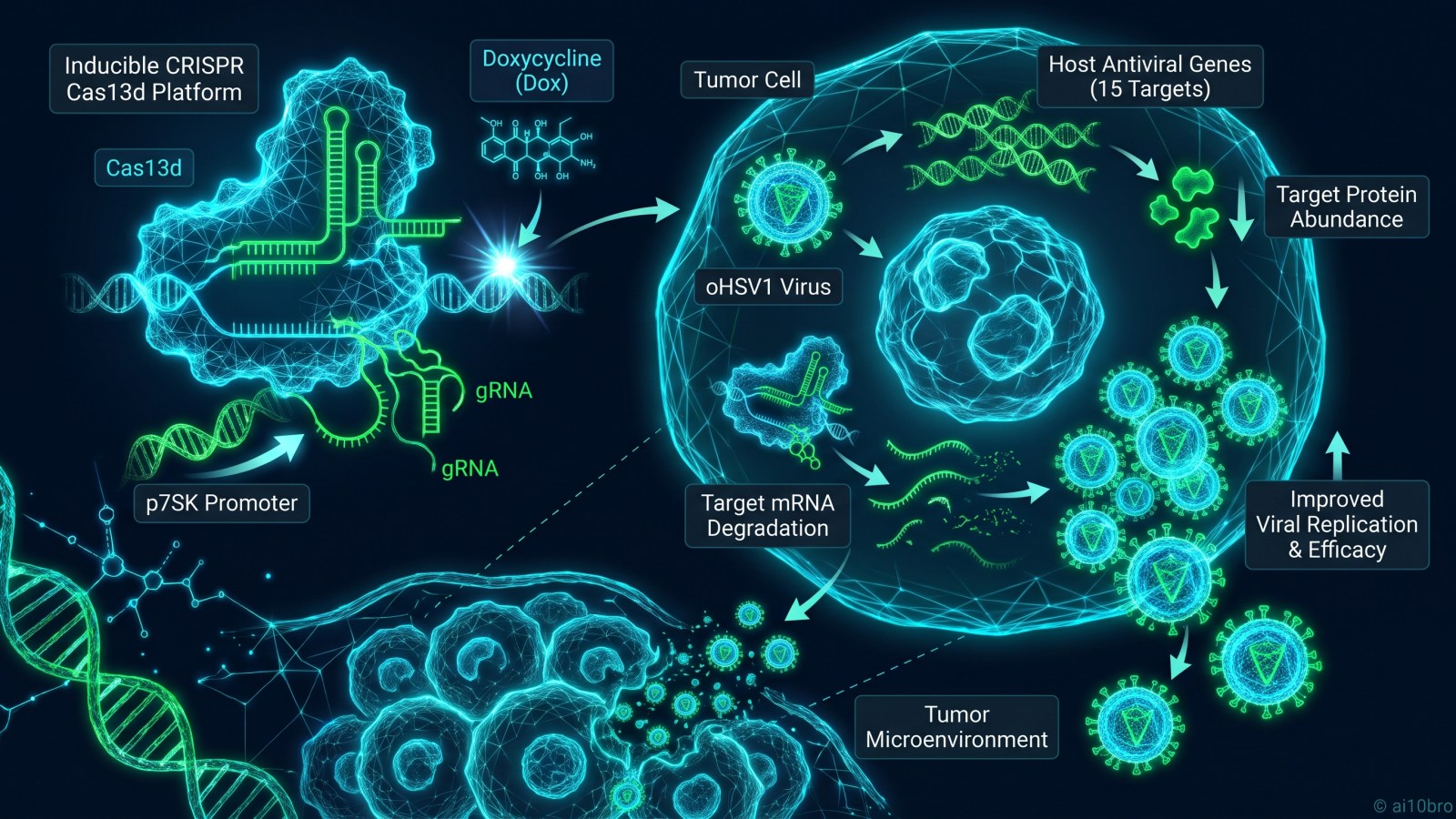
A team led by Ameil et al. has developed an inducible CRISPR Cas13d platform designed specifically for enhancing the efficacy of oncolytic herpes simplex virus type 1 (oHSV1). This approach targets and reduces the abundance of host antiviral factors that can impede viral replication within cancerous cells, a critical hurdle in oncology research. The system was optimized using doxycycline-responsive Tet On and Tet Off systems for precise control over gene expression.
Context & Significance: A Billion-Dollar Opportunity
The global market for oncolytic viruses is projected to reach $3 billion by 2030, driven by increasing clinical validation and regulatory approvals. This breakthrough has the potential to overcome existing limitations in viral efficacy, making it a significant player in the biotech industry’s quest for more effective cancer treatments.
The innovation offers a strategic advantage over competitors, as it can be fine-tuned to target specific antiviral factors within different tumor models. It positions itself well against other emerging gene editing technologies by offering both precision and scalability—key attributes for commercial success in the biotech sector.
How It Works: Precision Engineering at Work
The platform employs CRISPR Cas13d, a RNA-guided nuclease that can be programmed to target specific RNA sequences within host cells. This technology was optimized through experiments and reporter assays, which demonstrated its superiority over Cas13b in reducing the abundance of targeted proteins.
To ensure precise timing and control over gene expression, researchers integrated doxycycline-responsive Tet On and Tet Off systems into the viral genome. The final design incorporates a library of guide RNAs targeting 15 host antiviral genes, providing a flexible toolkit for modulating host responses during infection.
Compared to previous methods that relied on broad-spectrum inhibitors, this targeted approach offers greater specificity and efficacy in enhancing oHSV1’s ability to infect and replicate within tumor cells. This method is also more cost-effective in the long term by reducing the need for expensive antiviral drugs.
Real-World Applications: From Lab to Clinic
The immediate application of this technology lies in clinical trials, where it can be used to improve existing oncolytic virus therapies. Companies such as Amgen and Merck, already invested in viral oncology, are likely candidates for commercialization.
Further down the line, the platform could facilitate the development of personalized cancer treatments by allowing for precise targeting of specific antiviral pathways within individual patients’ tumors. This customization offers a significant advantage over one-size-fits-all approaches and can potentially reduce side effects while increasing treatment efficacy.
What’s Next: Looking Ahead
The next steps involve further clinical validation to demonstrate safety and efficacy in human trials. Key milestones will include regulatory approvals from agencies such as the FDA, paving the way for broader adoption across the oncology landscape.
Challenges remain, particularly around ensuring consistent viral delivery and targeting specific tumor types with minimal off-target effects. However, the potential benefits of this technology make it a significant player in the ongoing race to develop more effective cancer therapies.