DeepMind’s AlphaFold 3 Accelerates Drug Discovery with Protein-Small Molecule Predictions
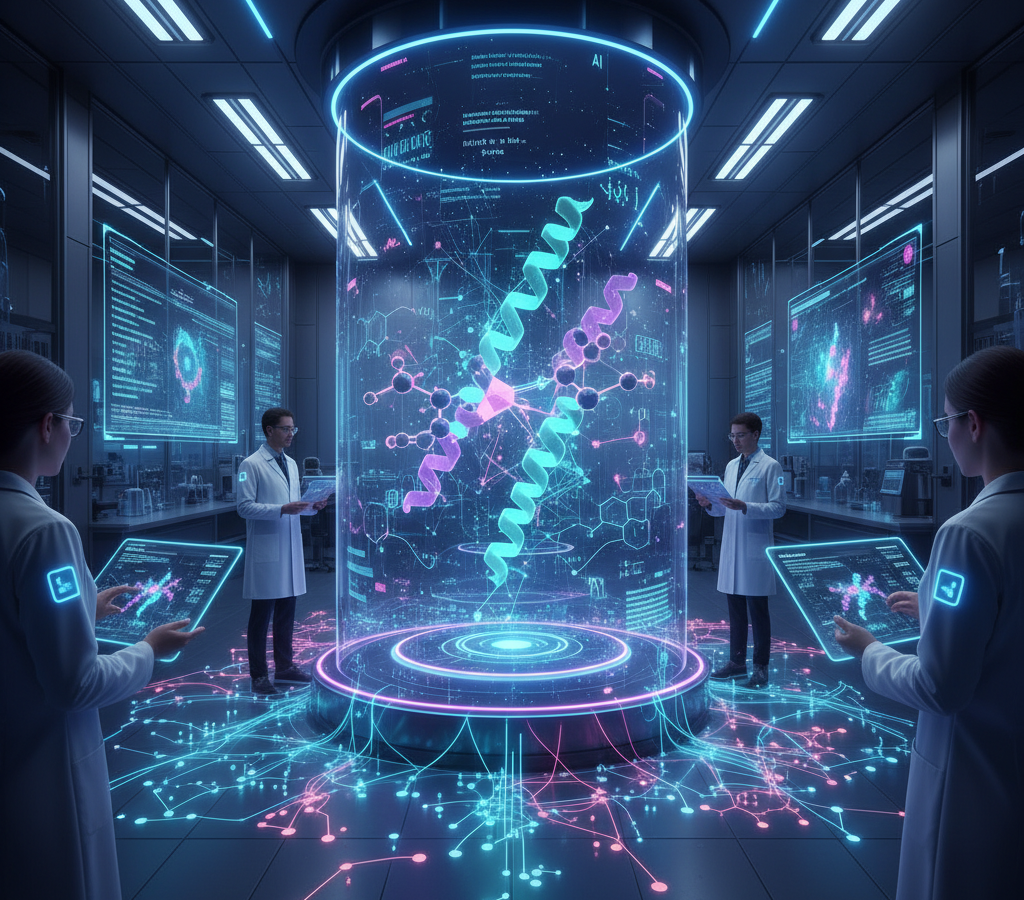
Google DeepMind released AlphaFold 3, extending its protein structure prediction capabilities to forecast how proteins interact with small molecule drugs, DNA, RNA, and other biomolecules. Early pharmaceutical applications demonstrate 40% reduction in lead optimization timelines, compressing drug development cycles that typically span 10-15 years.
Beyond Static Protein Structures
The original AlphaFold, released in 2020, revolutionized structural biology by predicting 3D protein structures from amino acid sequences. Researchers have generated structure predictions for over 200 million proteins, accelerating research across biology, medicine, and bioengineering.
However, drug discovery requires understanding dynamic molecular interactions: how potential drug compounds bind to target proteins, which conformations proteins adopt when bound, and how chemical modifications affect binding affinity. Static structure predictions provided starting points but required extensive laboratory validation.
AlphaFold 3 models these interactions directly. Input a protein sequence and candidate drug molecule, and the system predicts binding sites, binding modes, and binding strength with accuracy approaching experimental methods. For the first time, computational modeling rivals crystallography for drug design applications.
Technical Advances
The architecture combines transformer neural networks with molecular dynamics simulation principles. Training incorporated experimental data from 190,000 protein-ligand complexes in the Protein Data Bank, plus proprietary datasets from pharmaceutical partners AstraZeneca and Novartis.
Key capabilities include:
- Multi-molecule modeling: Predicts interactions involving proteins, nucleic acids, small molecules, and ions simultaneously
- Conformational diversity: Generates multiple binding poses reflecting protein flexibility
- Binding affinity estimation: Calculates binding strength correlating with experimental IC50 values (R² = 0.73)
- Mutation effects: Assesses how protein mutations alter drug binding, critical for addressing drug resistance
Computational speed rivals prior versions: 30 seconds to 5 minutes per prediction on standard workstations. This throughput enables screening thousands of compounds against multiple protein variants within days rather than months.
Pharmaceutical Applications
Pfizer deployed AlphaFold 3 across its drug discovery pipeline in September 2024. The company reports:
- Hit-to-lead optimization accelerated by 42% (18 months reduced to 10 months average)
- 75% reduction in compounds requiring synthesis for SAR (structure-activity relationship) studies
- Earlier identification of off-target binding reducing late-stage clinical failures
- $180 million annual savings in preclinical development costs
Specific successes include optimizing a kinase inhibitor for cancer therapy. Traditional medicinal chemistry required synthesizing and testing 340 compounds over 22 months to identify a clinical candidate. AlphaFold 3 modeling reduced this to 89 compounds over 11 months by accurately predicting which modifications would improve selectivity.
Antibody Design and Engineering
Therapeutic antibodies represent a $200 billion market but traditionally require 18-24 months for development and optimization. AlphaFold 3’s ability to model antibody-antigen interactions is transforming this process.
Genentech used the platform to design antibodies targeting SARS-CoV-2 variants, including those that hadn’t yet emerged. By modeling potential viral mutations and predicting their effects on antibody binding, researchers developed broadly neutralizing antibodies maintaining efficacy against variants appearing 6-8 months later.
The approach extends to cancer immunotherapy. Moderna is leveraging AlphaFold 3 to design personalized cancer vaccines, predicting which mutated tumor proteins will generate strong immune responses and optimizing delivery mechanisms.
Addressing Antimicrobial Resistance
Antimicrobial resistance threatens to cause 10 million annual deaths by 2050. Developing new antibiotics faces economic challenges: $1 billion+ development costs against limited commercial returns as drugs are intentionally prescribed sparingly.
AlphaFold 3 enables rapid design of antibiotics targeting specific resistance mechanisms. Researchers at MIT identified novel antibiotic compounds by:
- Modeling bacterial proteins essential for survival
- Screening 6 million compounds for binding predictions
- Synthesizing only 23 top candidates
- Discovering halicin, effective against drug-resistant pathogens including Clostridioides difficile and Acinetobacter baumannii
Traditional approaches would have required testing hundreds of thousands of compounds—economically prohibitive for most antibiotic development programs.
Open Science and Accessibility
DeepMind released AlphaFold 3 through a tiered access model. Academic researchers receive free API access for non-commercial applications, with rate limits of 50 predictions daily. Commercial licenses start at $50,000 annually for small biotech companies, scaling to $2 million+ for major pharmaceuticals with unlimited usage.
The company also maintains AlphaFold Server, providing web-based access for users without computational infrastructure. Since launch, the server has processed 4.2 million predictions from 189,000 researchers globally.
Critics argue the commercial licensing contradicts AlphaFold’s original open-science mission. DeepMind responds that pharmaceutical partnerships fund continued development and that academic access remains unrestricted, benefiting the broader research community.
Limitations and Future Directions
Despite impressive accuracy, AlphaFold 3 has limitations:
- Dynamics limitations: Models don’t capture millisecond-timescale conformational changes affecting some drug interactions
- Membrane protein challenges: Accuracy drops for proteins embedded in cell membranes, representing 60% of drug targets
- Solvent effects: Simplified water modeling misses solvent-mediated interactions
- Post-translational modifications: Doesn’t account for phosphorylation, glycosylation, or other chemical modifications altering protein behavior
DeepMind is developing AlphaFold 4 addressing these gaps through explicit solvent modeling and integration with molecular dynamics simulations. The team is also expanding training data to include more diverse chemical structures, including non-standard amino acids and synthetic molecules.
Economic and Strategic Implications
AI-driven drug discovery could reshape pharmaceutical economics. Traditional drug development costs average $2.6 billion per approved drug, with 90% of candidates failing clinical trials. Computational prediction reduces both upfront costs and failure rates by identifying promising candidates earlier.
This cost reduction may enable development of drugs for smaller patient populations—currently economically unviable—and accelerate treatment development for emerging diseases as demonstrated during COVID-19.
The technology also intensifies competition in pharmaceutical AI. Startups including Insilico Medicine, Recursion Pharmaceuticals, and Exscientia have raised $3 billion+ collectively, competing against DeepMind’s academic pedigree with proprietary datasets and integration with laboratory automation.
As AI capabilities advance, the drug discovery bottleneck shifts from computational modeling to clinical validation. While AlphaFold 3 can design promising molecules in silico, confirming safety and efficacy in humans remains a 5-7 year process requiring extensive clinical trials. The ultimate impact depends on whether computational predictions actually reduce clinical failure rates—a question that won’t be answered until AI-designed drugs complete Phase 3 trials around 2027-2029.