Harnessing the Power of Moss
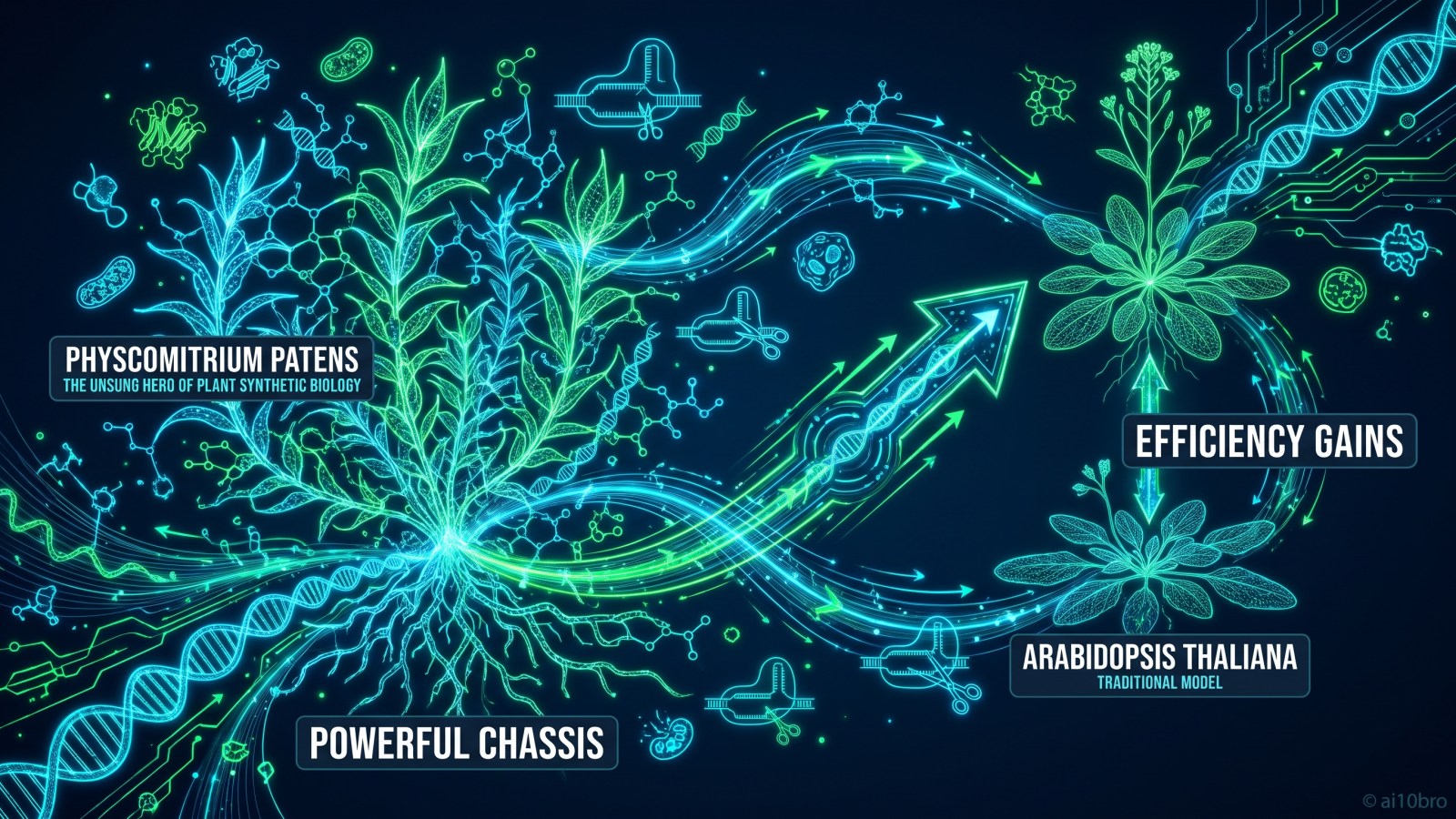
Recent studies highlight that Physcomitrium patens, commonly known as spreading earthmoss or Physco, is a promising organism in plant synthetic biology. This moss offers significant advantages over traditional models like Arabidopsis thaliana and maize, making it an attractive chassis for biotechnological applications.
Overview of the Breakthrough
A team led by Rebecca Wolters, Sze Wai Tse, and James P B Lloyd published their findings in a study titled “Moss is more: The moss Physcomitrium patens as an ideal chassis for plant synthetic biology.” This research underscores the unique advantages of Physco, including its shorter life cycle and ease of experimental handling. Notably, the organism’s haploid nature and high efficiency in integrating transgenes through homologous recombination make it a compelling choice for biotech applications.
The Broader Implications
This breakthrough is not just confined to the laboratory; its implications extend into practical industrial applications. The global synthetic biology market, valued at $13 billion in 2025 and projected to grow to $48.6 billion by 2030, could see substantial growth due to this innovation. Previously, limitations such as low efficiency in gene integration and complex experimental protocols were hurdles in plant biotechnology. Physco‘s ability to overcome these challenges positions it as a key player in the emerging biotech landscape.
The Technical Details
The moss’s utility lies in its genetic simplicity compared to more complex flowering plants. Its haploid nature means that any inserted transgene is immediately expressed, bypassing the need for complex breeding processes. Additionally, Physco‘s genome can be modified with a high efficiency of up to 50%, far exceeding traditional methods used in other plant systems. These attributes have enabled applications ranging from synthetic genomes and recombinant protein production to metabolic engineering and artificial organelle construction.
The Toolkit Behind the Breakthrough
Various toolkits developed for Physco include methods for constructing transformation cassettes, DNA and RNA editing tools, and a suite of reporters that enable precise microscopy imaging or quantification of gene expression. This toolkit has facilitated rapid experimentation cycles and efficient manipulation of the moss’s genetic makeup.
Real-World Applications
The potential applications for Physco are vast, extending from pharmaceutical protein production to biofuels and bioplastics. Companies like SynBio Corp have already begun exploring its use in producing insulin analogs with enhanced stability compared to traditional bacterial or yeast systems. Moreover, the moss’s ability to maintain episomes introduces additional possibilities for gene expression control, making it an attractive platform for future industrial-scale applications.
The Future of Physco
Looking ahead, the immediate next steps involve scaling up production processes and refining genetic engineering techniques. Although challenges remain—such as dealing with a high number of duplicated genes—the potential benefits outweigh these drawbacks. This innovation aligns well with broader sustainability goals by offering a more efficient and versatile platform for bioengineering.