Biologically Sourced Nanotechnology Takes a Leap Forward
Overview
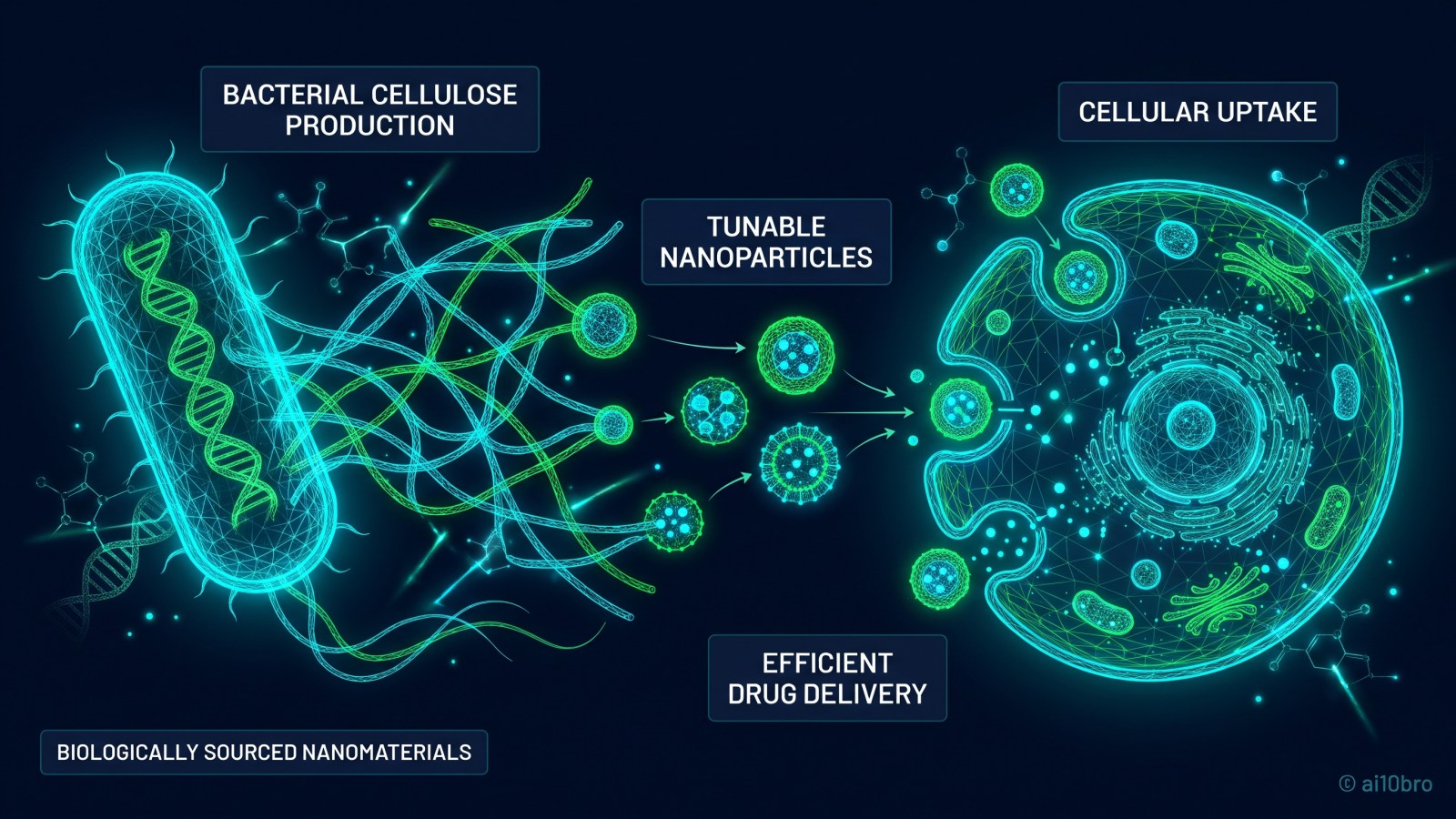
A team of researchers including Gabrielle N Balistreri and colleagues have developed tunable bacterial cellulose nanoparticles (BCNPs) for drug delivery applications. The breakthrough lies in their ability to modulate chemical functionalities, making these BCNPs more stable and effective as carriers in cellular delivery systems. Each nanoparticle measures an average size of 114 ± 7.2 nm with a zeta potential of -25.9 ± 2.6 mV—ideal properties for penetrating tissues at the nanoscale.
Context & Significance
The significance of this development is profound, especially in the realm of biologically sourced materials. Traditional synthetic nanomaterials often come with environmental concerns and potential health risks. By contrast, BCNPs are not only biodegradable but also offer a sustainable alternative that could disrupt traditional drug delivery systems.
With an estimated global market for nanoparticle drug delivery valued at $15 billion by 2030, the commercial implications of this research cannot be overstated. The current limitations in synthetic materials—such as limited biocompatibility and stability—are overcome with these tunable BCNPs, providing a competitive edge in both medical and consumer applications.
How It Works
The creation of these nanoparticles begins with dispersed bacterial cellulose (BC) dissolved in dimethylacetamide and lithium chloride. This solution is then precipitated into an aqueous surfactant, forming BCNPs. The team further enhanced the chemical properties by applying methylation, acetylation, and amination to the hydroxyl end groups on BC.
Validation through Fourier transform infrared spectroscopy confirmed the presence of methyl, acetyl, and amine functional groups. X-ray diffraction and atomic force microscopy revealed that despite slight reductions in crystallinity (2.8%), these modifications did not significantly compromise the overall structure or functionality of the BCNPs.
Tunable Functionalities
The real breakthrough is in the tunability of BCNP functionalities, which allow for precise modulation to suit specific drug delivery needs. This flexibility could lead to more targeted and efficient treatments compared to current methods, thus potentially reducing side effects and increasing therapeutic efficacy.
Real-World Applications
The most immediate applications are likely in the pharmaceutical industry, where BCNPs can enhance the delivery of drugs directly into cells. This method could be particularly beneficial for treating diseases like cancer or neurodegenerative conditions where precise and effective drug delivery is crucial.
Several biotech companies have already expressed interest in integrating this technology into their existing platforms. The timeline for broader adoption will depend on regulatory approvals, but the early feedback from industry players suggests a promising path towards commercialization within the next 5-7 years.
What’s Next
The immediate focus is on further refining the chemical properties of BCNPs to maximize their efficacy in various drug delivery scenarios. The team will also be exploring partnerships with major pharmaceutical companies to advance clinical trials and gather more data on safety and performance.
In terms of broader sustainability goals, these BCNPs represent a significant step towards reducing reliance on synthetic materials, aligning well with global trends toward environmental responsibility in the biotech sector. However, challenges remain in scaling up production cost-effectively while maintaining quality standards.