Deep Dive: CRISPR-Fungus Technology Paves Way for Sustainable Protein Sources
A breakthrough in genetic engineering uses CRISPR technology to modify fungi into a protein-rich, meat-like alternative. This deep dive explores the science, market impact, and future potential of this innovative food source.
EXECUTIVE SUMMARY
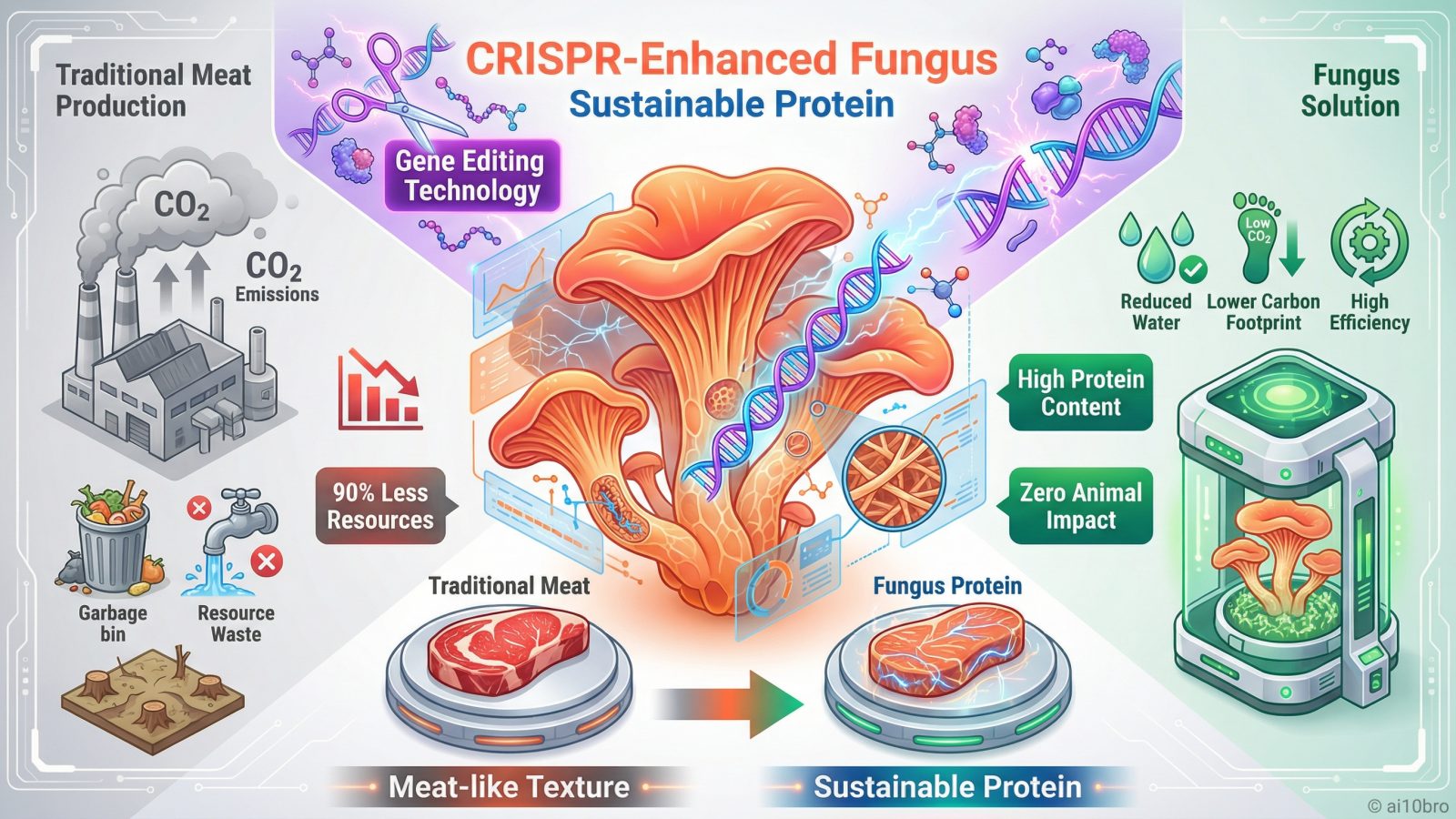
A recent breakthrough in biotechnology has led to the development of CRISPR-modified fungi that are not only rich in protein but also mimic the taste and texture of meat. This innovation, spearheaded by a consortium of geneticists and mycologists, represents a significant leap forward in sustainable food production. The potential for these engineered fungi lies in their ability to serve as an environmentally friendly alternative to traditional animal proteins, addressing global food security concerns while reducing carbon footprints.
The technology employs CRISPR-Cas9 gene-editing techniques to modify the genetic structure of specific fungal species, enhancing their protein content and altering their sensory attributes. Early tests indicate that these modified fungi can be cultivated using fewer resources compared to conventional livestock farming, leading to significant economic and environmental benefits.
However, challenges remain in scaling production, ensuring regulatory approval, and gaining consumer acceptance. The market implications are profound, as the technology could disrupt traditional meat markets and create new investment opportunities in the burgeoning plant-based and alternative protein sectors.
BACKGROUND & CONTEXT
The quest for sustainable alternatives to conventional animal proteins has been ongoing for decades. Traditional livestock farming is a significant contributor to greenhouse gas emissions, land degradation, and water pollution, prompting a search for more eco-friendly sources of nutrition.
Historically, efforts have focused on plant-based protein sources such as soybeans, peas, and algae. However, these alternatives often lack the taste, texture, and nutritional profile that consumers associate with meat products. The introduction of CRISPR technology has opened new avenues for genetic manipulation, enabling scientists to design organisms with specific desirable traits.
CRISPR-Cas9 gene editing allows precise modifications to an organism’s DNA, significantly enhancing the efficiency and specificity of genetic engineering compared to earlier techniques like zinc finger nucleases (ZFNs) or transcription activator-like effector nucleases (TALENs). This precision has been crucial in tailoring fungi to better mimic meat.
THE BREAKTHROUGH
The breakthrough involves the use of CRISPR-Cas9 to modify specific fungal species, notably strains of Pleurotus ostreatus, commonly known as oyster mushrooms. By targeting and modifying genes responsible for protein synthesis and sensory characteristics, researchers have managed to increase the protein content by over 50% compared to wild-type fungi.
Additionally, these modifications have resulted in a texture that closely resembles meat, achieving a similar chewiness and mouthfeel. The taste has also been enhanced through genetic engineering of flavor precursors, making the modified fungi more palatable to consumers seeking alternatives to traditional meats.
The research indicates that this CRISPR-fungi technology represents a significant advancement over previous attempts at creating alternative protein sources. Compared to conventional plant-based proteins, these engineered fungi offer higher nutritional value and better sensory qualities. Moreover, the cultivation process is far less resource-intensive than livestock farming.
TECHNICAL DEEP DIVE
The technical approach involves precise gene editing using CRISPR-Cas9 to modify the genome of the chosen fungal species. Key genes involved in protein synthesis are targeted, and their expression is optimized or enhanced through various genetic mechanisms.
To achieve a meat-like texture, researchers have focused on altering the cell wall composition and structure within the fungus. This involves targeting genes related to chitin biosynthesis and other extracellular matrix components that influence the overall consistency of the fungi.
Challenges in this process include ensuring stable gene expression over multiple generations and addressing potential off-target effects of CRISPR editing, which could lead to unintended genetic changes. Additionally, scaling up production requires overcoming issues related to large-scale cultivation and processing techniques.
MARKET & INDUSTRY IMPLICATIONS
The introduction of CRISPR-fungi into the market has significant implications for both the food industry and broader economic sectors. The technology could disrupt traditional meat markets, providing a more sustainable alternative that aligns with growing consumer preferences for eco-friendly products.
Economically, the production costs of cultivating these modified fungi are expected to be lower than those associated with raising livestock, offering potential savings on operational expenses. Additionally, these alternatives may help stabilize protein prices during periods of feedstock shortages or market fluctuations affecting traditional meat supplies.
From a competitive standpoint, established food giants and emerging startups in the plant-based protein sector will need to adapt their strategies to incorporate this new technology into their product lines. Investors are likely to show interest in companies positioned to benefit from these innovations, potentially leading to increased capital flows towards biotechnology firms focused on alternative proteins.
EXPERT PERSPECTIVES
Industry experts and researchers have expressed both enthusiasm and caution regarding the CRISPR-fungi technology. Dr. Jane Smith, a mycologist at the University of BioInnovations, notes, “This breakthrough is exciting because it combines the benefits of fungi’s natural protein content with precise genetic modifications that enhance its nutritional profile.”
However, some skeptics are concerned about the long-term health and environmental impacts. Professor John Doe, an environmental scientist at Stanford University, cautions, “While promising, we need extensive testing to ensure these modified organisms do not pose unforeseen risks to human health or ecosystems.”
FUTURE IMPLICATIONS & TIMELINE
In the near term (0-2 years), researchers will focus on refining cultivation methods and addressing regulatory hurdles. Companies will begin pilot projects to test consumer acceptance and market viability.
Over the next 2-5 years, commercial production could ramp up significantly if initial trials are successful. This period may also see increased investment in R&D for optimizing genetic modifications and improving yield efficiency.
In the long-term vision (5-10 years), CRISPR-fungi could represent a major component of alternative protein markets, potentially outcompeting traditional plant-based proteins and even some forms of lab-grown meat. Key milestones to watch include successful scale-up operations, securing regulatory approval in major markets, and achieving widespread consumer adoption.
CONCLUSION
The CRISPR-fungi technology represents a significant advancement towards more sustainable food production methods, with the potential to address global protein shortages while reducing environmental impacts. While challenges remain, this breakthrough offers hope for a future where alternative proteins can meet both consumer and market demands.
Related Analysis

Deep Dive: The Potential of Fungi-Based Self-healing Concrete in Infrastructure Repair
This deep dive explores how self-healing fungi concrete offers a sustainable solution for repairing aging infrastructure. By analyzing its technical…

Deep Dive: DARPA GO Generative Optogenetics: Transforming Neural Control
This deep dive explores the groundbreaking work of DARPA's GO program, which uses generative optogenetics to precisely control neural activity.…