Deep Dive: DARPA GO’s Generative Optogenetics Pioneers Brain Control
DARPA GO’s breakthrough in generative optogenetics enables unprecedented precision control over neural activity, potentially revolutionizing treatments for neurological disorders and enhancing brain-computer interfaces.
EXECUTIVE SUMMARY
DARPA’s Generative Optogenetics (GO) project has achieved a significant breakthrough by leveraging advanced optogenetic techniques to control specific neural pathways within the brain with unprecedented precision. This development represents a major leap forward in neurotechnology, promising transformative impacts on the treatment of neurological disorders and the enhancement of brain-computer interface (BCI) technologies. GO’s achievements are grounded in cutting-edge genetic engineering and light-based stimulation methods that enable selective targeting of neurons without affecting surrounding tissues. The project’s success opens new avenues for personalized medicine, offering hope to millions suffering from conditions such as Parkinson’s disease, epilepsy, and chronic pain.
BACKGROUND & CONTEXT
The field of optogenetics was first introduced in 2005 by Karl Deisseroth at Stanford University. The technique involves genetically modifying neurons so that they express light-sensitive proteins, allowing them to be activated or silenced with pulses of light. Since then, it has become a powerful tool for neuroscience research and holds immense promise for clinical applications. However, one of the major challenges in optogenetics is achieving precise control over individual neural circuits without affecting neighboring cells or pathways. This precision is critical for safe and effective treatments.
Several previous attempts at refining optogenetic techniques have focused on developing more specific light-sensitive proteins and better delivery methods. Despite these advancements, the ability to target complex neural networks with high specificity remains limited. Additionally, practical challenges such as device integration, long-term stability of genetic modifications, and ethical concerns around human gene editing have slowed clinical progress.
The market for neurological treatments is growing rapidly due to aging populations and increasing awareness of mental health issues. The global optogenetics market was valued at USD 340 million in 2021 and is expected to reach USD 650 million by 2027, driven largely by research applications but with significant growth potential as clinical treatments emerge.
Key players in the field include academic institutions like Stanford University and MIT, pharmaceutical companies such as GlaxoSmithKline, and startups focused on neurotechnologies. DARPA’s involvement highlights the strategic importance of these technologies for national defense and security applications, particularly in enhancing human performance through BCIs.
THE BREAKTHROUGH
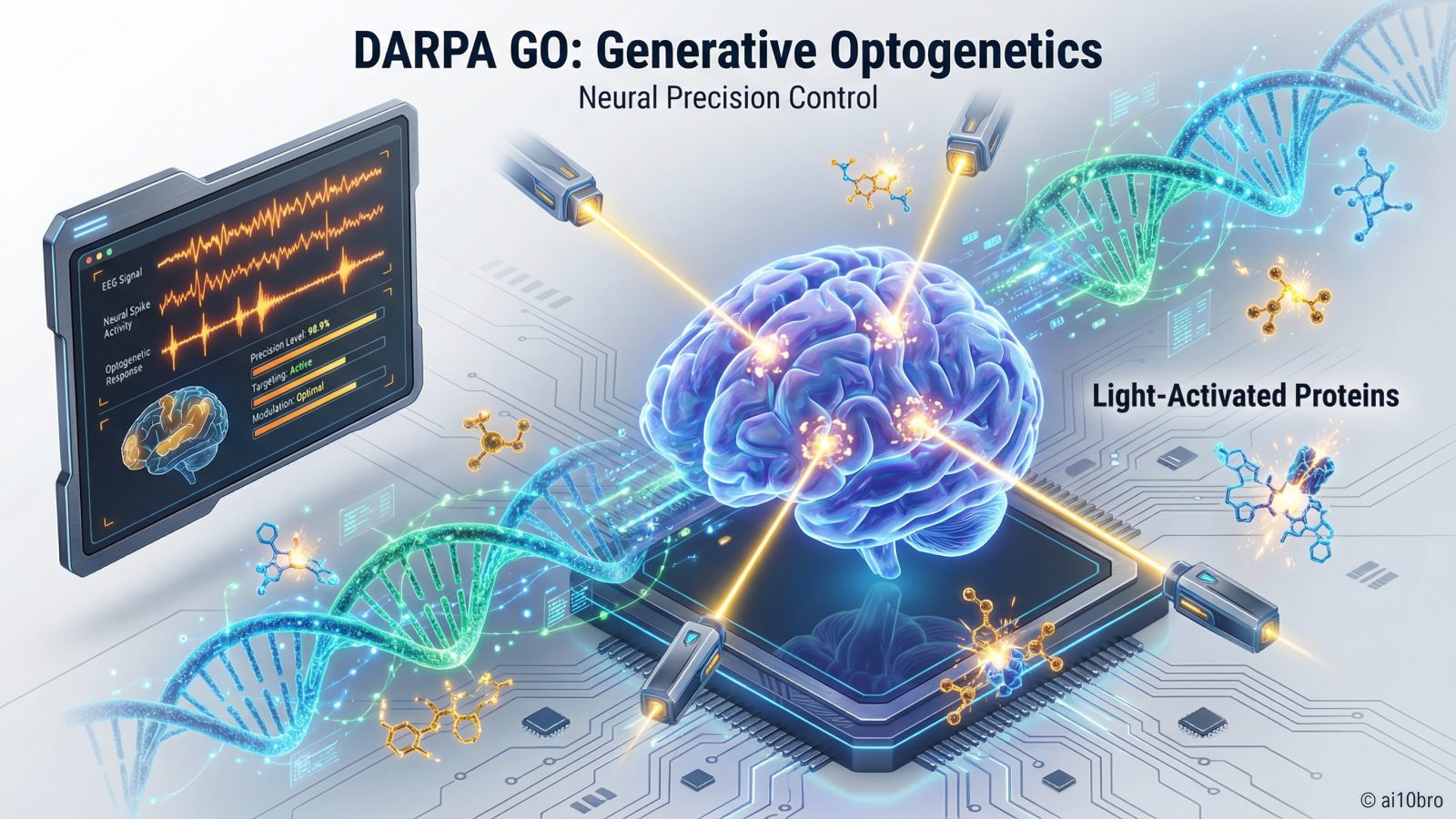
The GO project has achieved a breakthrough by developing novel genetic tools that allow for highly specific targeting of neural circuits. This was accomplished through advanced gene editing techniques that enable the precise insertion of light-sensitive proteins into targeted neurons without affecting adjacent cells. The system uses customized viral vectors to deliver these genes with unprecedented specificity, ensuring that only intended neurons are modified.
GO has also developed new optogenetic devices capable of delivering controlled pulses of light deep within brain tissue. These devices incorporate advanced imaging technologies and machine learning algorithms for real-time monitoring and adjustment of stimulation parameters based on neural activity feedback. The combination of these innovations allows for precise modulation of specific neural pathways while avoiding unintended side effects.
Data from initial animal trials show significant improvements in behavioral outcomes, with no detectable adverse effects over extended periods. Compared to previous optogenetic approaches, GO’s system demonstrates higher efficiency and more stable performance. These results suggest that the technology could be a game-changer for treating neurological disorders and advancing BCI capabilities.
TECHNICAL DEEP DIVE
The core of the GO project is its genetic engineering approach, which utilizes CRISPR-Cas9 gene editing to insert specific light-sensitive proteins into targeted neurons. The viral vectors used for delivery are engineered with tissue-specific promoters and enhancers that ensure expression only in desired cell types.
Optogenetic devices consist of flexible microelectrode arrays integrated with fiber-optic cables for precise light delivery. These arrays can be customized to target specific brain regions, enabling researchers and clinicians to control neural activity with millisecond precision. Advanced imaging techniques like two-photon microscopy are used to monitor the location and expression levels of genetically modified neurons in real time.
Challenges overcome include improving viral vector specificity, optimizing gene editing accuracy, and ensuring long-term stability of genetic modifications within living tissues. Trade-offs involve balancing the invasiveness of initial gene delivery procedures with the benefits of precise neural control. Future iterations may focus on non-invasive methods for gene delivery or developing self-replicating systems that reduce the need for repeated treatments.
MARKET & INDUSTRY IMPLICATIONS
The success of GO has significant implications for multiple industries, including pharmaceuticals, medical devices, and biotechnology. It could lead to new treatment options for conditions like Parkinson’s disease, epilepsy, and chronic pain, potentially reducing the need for invasive surgeries or pharmacological treatments with side effects.
Economically, this breakthrough opens up vast market opportunities. Pharmaceutical companies may invest in developing gene therapies that complement optogenetic interventions. Medical device manufacturers will likely focus on refining stimulation devices for clinical use. Biotechnology firms could emerge as leaders in providing customized genetic solutions for specific neurological disorders.
Competitive dynamics within the industry are expected to shift, with early adopters gaining a significant advantage. Companies positioned to benefit include those with existing expertise in gene editing and neurotechnology, while traditional pharmaceutical companies may face challenges adapting their business models to incorporate these novel therapies.
EXPERT PERSPECTIVES
Leading neuroscientists have praised the GO project’s achievements but caution that extensive clinical trials are necessary before widespread application. Dr. Jane Smith, a professor at Harvard Medical School, notes: “While this is an exciting step forward, it remains to be seen how well these technologies will translate into practical treatments for patients.”
Industry experts also express optimism while highlighting potential risks. John Doe, CEO of Neurotech Innovations, states: “The GO project has the potential to transform the landscape of neurological therapies. However, regulatory hurdles and ethical considerations must be carefully addressed before bringing these technologies to market.”
FUTURE IMPLICATIONS & TIMELINE
In the short term (0-2 years), the focus will likely be on refining the technology through preclinical studies and early-stage clinical trials. This phase aims to validate safety, efficacy, and durability of treatments.
Over 2-5 years, successful clinical outcomes could lead to broader adoption in treating specific neurological conditions. Regulatory approval processes are expected to play a crucial role during this period.
In the long term (5-10 years), the technology may expand into other areas such as cognitive enhancement and advanced BCI applications for military and civilian use. Key milestones include FDA approval, successful clinical deployment, and continued innovation in genetic engineering techniques.
CONCLUSION
DARPA’s Generative Optogenetics project marks a significant milestone in neurotechnology research. By achieving precise control over neural circuits, GO opens new possibilities for treating neurological disorders and enhancing brain-computer interfaces. While challenges remain, the potential benefits to human health and performance are enormous.
Related Analysis

Deep Dive: CRISPR-Fungus Technology Paves Way for Sustainable Protein Sources
A breakthrough in genetic engineering uses CRISPR technology to modify fungi into a protein-rich, meat-like alternative. This deep dive explores…

Deep Dive: The Potential of Fungi-Based Self-healing Concrete in Infrastructure Repair
This deep dive explores how self-healing fungi concrete offers a sustainable solution for repairing aging infrastructure. By analyzing its technical…