Q4 2025 Synthetic Biology Funding: $4.2B Deployed Across 89 Deals
Synthetic biology raised record $4.2B in Q4 2025 across 89 deals, with seven mega-rounds exceeding $100M each. Materials applications captured 42% of capital as commercial validation emerges.
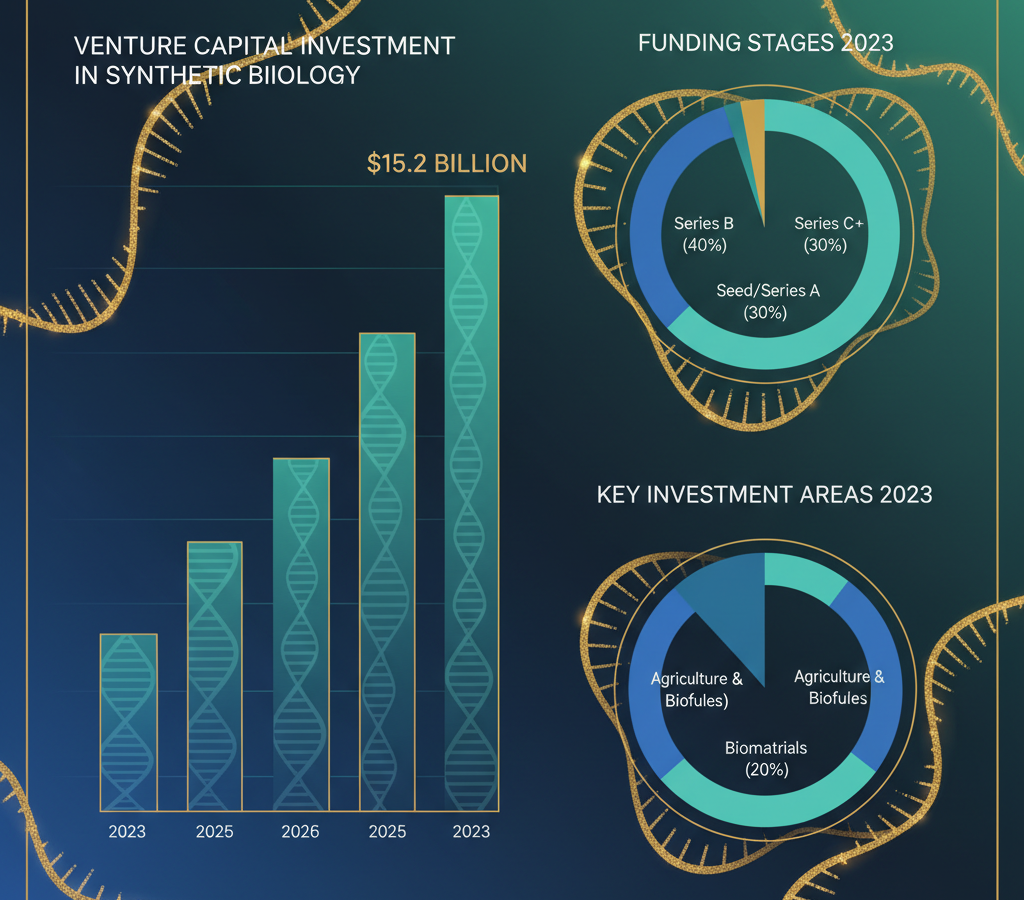
Synthetic biology attracted record quarterly investment in Q4 2025, with $4.2 billion deployed across 89 deals globally. The funding surge reflects growing confidence that engineered biology will displace petroleum-based manufacturing across materials, chemicals, and pharmaceuticals worth trillions in annual production.
Mega-Rounds Dominate Deal Activity
Seven companies raised rounds exceeding $100 million, collectively accounting for 67% of quarterly capital ($2.8B). This concentration continues the trend toward backing proven commercial-scale platforms rather than early-stage research projects.
Largest Q4 2025 rounds:
- Ginkgo Bioworks: $580M Series G (SoftBank Vision Fund, Baillie Gifford). Valuation: $15.2B
- Zymergen: $470M Series F (TPG, T. Rowe Price). Valuation: $3.8B
- Bolt Threads: $350M Series E (Formation 8, Founders Fund). Valuation: $2.1B
- Pivot Bio: $320M Series D (DCVC, Temasek). Valuation: $2.0B
- Geltor: $280M Series C (CPT Capital, Cultivian Sandbox). Valuation: $1.6B
- Arzeda: $240M Series B (Breakthrough Energy Ventures, Khosla Ventures). Valuation: $890M
- Antheia: $220M Series C (Bill Gates, Peter Thiel). Valuation: $750M
Median Series B valuation reached $340 million—up 73% from Q4 2024—while Series C median hit $1.2 billion. These valuations reflect investor belief that synthetic biology platforms will capture significant market share from incumbent chemical and materials companies.
Sector Breakdown
Materials (42% of capital): Bio-based materials attracted $1.8B, led by Bolt Threads’ spider silk proteins for textiles and Zymergen’s performance films for electronics. Investors see materials as the nearest-term commercial opportunity, with established supply chains and regulatory pathways.
Therapeutics (31% of capital): $1.3B flowed to companies engineering microbes to produce pharmaceuticals. Antheia’s opioid synthesis platform eliminates dependence on poppy cultivation, while Lygos produces organic acids for antibiotics at 70% below traditional manufacturing costs.
Agriculture (18% of capital): $760M targeted agricultural applications, predominantly nitrogen-fixing microbes and biological pesticides. Pivot Bio’s microbial nitrogen fertilizer—applied to 8 million acres in 2025—demonstrated that synthetic biology can scale to commodity agriculture economics.
Food/Ingredients (9% of capital): $380M supported alternative protein and functional ingredient companies. Geltor’s collagen proteins for cosmetics and Perfect Day’s animal-free dairy proteins saw strong commercial traction, validating consumer acceptance of fermentation-derived products.
Geographic Distribution
North America dominated with 63% of capital ($2.6B across 47 deals), led by Bay Area companies accessing deep biotech and software venture expertise. Average US deal size reached $68M versus $42M internationally.
European synbio raised $920M across 24 deals, with strength in industrial biotechnology and circular economy applications. Regulatory frameworks favoring bio-based chemicals over petroleum derivatives create structural advantages for European companies.
Asia-Pacific activity reached $680M (18 deals), driven primarily by Chinese industrial biotechnology companies and Singapore’s synthetic biology hub. Government initiatives in both regions provide non-dilutive capital complementing venture investment.
Investor Composition Shifts
Corporate venture capital represented 41% of Q4 capital—up from 28% in Q4 2024. Strategic investors from chemicals (BASF, DSM), agriculture (Bayer, Corteva), and materials (3M, Toray) are positioning for industry disruption by backing potential acquirees or commercial partners.
Traditional biotech investors (including Arch Venture Partners, Flagship Pioneering, and DCVC) maintained commanding presence with 34% of capital. These firms bring operational expertise from building prior generations of biotech companies.
Climate-focused funds (Breakthrough Energy Ventures, Lowercarbon Capital, Prime Movers Lab) deployed $680M, prioritizing companies with clear decarbonization pathways. As carbon pricing mechanisms spread globally, climate impact provides additional return drivers beyond pure commercial metrics.
Commercial Milestones
Q4 saw several companies transition from pilot to commercial scale:
- LanzaTech: Commissioned 60,000-ton capacity facility converting steel mill emissions to ethanol. Secured $340M in committed offtake agreements from three chemical companies.
- Bolt Threads: Shipped first commercial orders of Microsilk™ fabric to luxury fashion brands. Production capacity expanding from 50 tons/year to 800 tons/year by Q3 2026.
- Pivot Bio: Achieved PROVEN® nitrogen product adoption on 8 million acres, demonstrating scalability to commodity agriculture. Revenue run rate exceeded $200M annually.
- Perfect Day: Launched animal-free ice cream in 3,500 retail locations. Manufacturing partnership with ADM provides access to fermentation capacity reaching 10,000 tons annually by 2027.
These commercial launches validate that synthetic biology can manufacture products at quality and cost competitive with incumbent technologies—the critical threshold for mass market adoption.
Technology Evolution
Platform companies enabling synthetic biology development attracted $340M:
- Ginkgo Bioworks expanded foundry capacity to 150,000 organism designs annually, operating as “AWS for biotech” by providing genetic engineering infrastructure.
- Zymergen integrated machine learning with robotic strain engineering, compressing development timelines from 18 months to 4 months for industrial enzymes.
- Inscripta shipped 240 CRISPR gene editing systems to research labs and companies, democratizing genetic engineering capabilities.
Declining costs of DNA synthesis (down 94% since 2010) and improving computational tools for metabolic pathway design create feedback loops accelerating innovation. What required PhD-level expertise five years ago is becoming accessible to master’s-level scientists, expanding the talent pool.
Regulatory Developments
Regulatory clarity improved significantly in Q4:
- EPA finalized framework for regulating microbial manufacturing strains, creating predictable 18-month approval pathway for contained-use applications.
- USDA granted non-regulated status to Pivot Bio’s nitrogen-fixing microbes, treating them equivalently to conventional agricultural inputs.
- FDA issued guidance on fermentation-derived ingredients for food, accelerating perfect Day, Geltor, and similar companies’ paths to market.
European Union’s revised GMO regulations exempted certain gene-edited organisms from restrictive approval processes, potentially opening €120B chemical manufacturing market to biological alternatives.
Market Outlook
2026 projections:
- Annual synthetic biology investment reaching $18-22B across 350-400 deals
- 10-15 companies achieving $500M+ annual revenue, validating commercial viability
- First major acquisition of synbio company by industrial chemicals incumbent ($3B+ transaction expected)
- Continued mega-round activity as capital-intensive manufacturing scale-up requires $300M-$500M Series D/E rounds
- Geographic diversification as Asian and European ecosystems mature
Risk factors:
- Manufacturing scale-up failures: Lab-scale processes don’t always translate to 100,000-liter fermenters
- Commodity price volatility: Bio-based materials compete with petroleum products; oil price crashes reduce competitiveness
- Regulatory delays: Unexpected safety concerns could slow approvals
- Talent constraints: Shortage of scientists with combined biology and engineering expertise
Long-Term Transformation
Synthetic biology represents a multi-decade industrial transformation comparable to computing’s shift from mainframes to cloud. Current commercial successes address ~0.1% of the $4.2 trillion global chemicals market, leaving vast opportunities for displacement.
The technology’s ultimate impact depends on continued cost reductions, manufacturing scalability, and regulatory evolution. However, Q4 2025’s funding levels and commercial milestones suggest investors believe synthetic biology will drive material portions of 21st-century manufacturing—transitioning from oil age chemistry to biology age engineering.
Key Takeaways
- Capital concentration accelerating: Mega-rounds ($100M+) now represent 67% of quarterly capital, up from 42% in 2024, as investors back proven platforms.
- Commercial validation emerging: Multiple companies achieved significant revenue milestones in Q4, demonstrating synbio can compete economically with incumbent technologies.
- Corporate strategic involvement increasing: 41% of capital from corporate VCs signals industrial players positioning for disruption of their core businesses.
- Materials applications lead commercialization: 42% of capital targets bio-based materials, offering clearest path to near-term revenue given established supply chains.
- Platform companies enabling next wave: Infrastructure providers like Ginkgo, Zymergen, and Inscripta received $340M to democratize genetic engineering capabilities.
Related Analysis
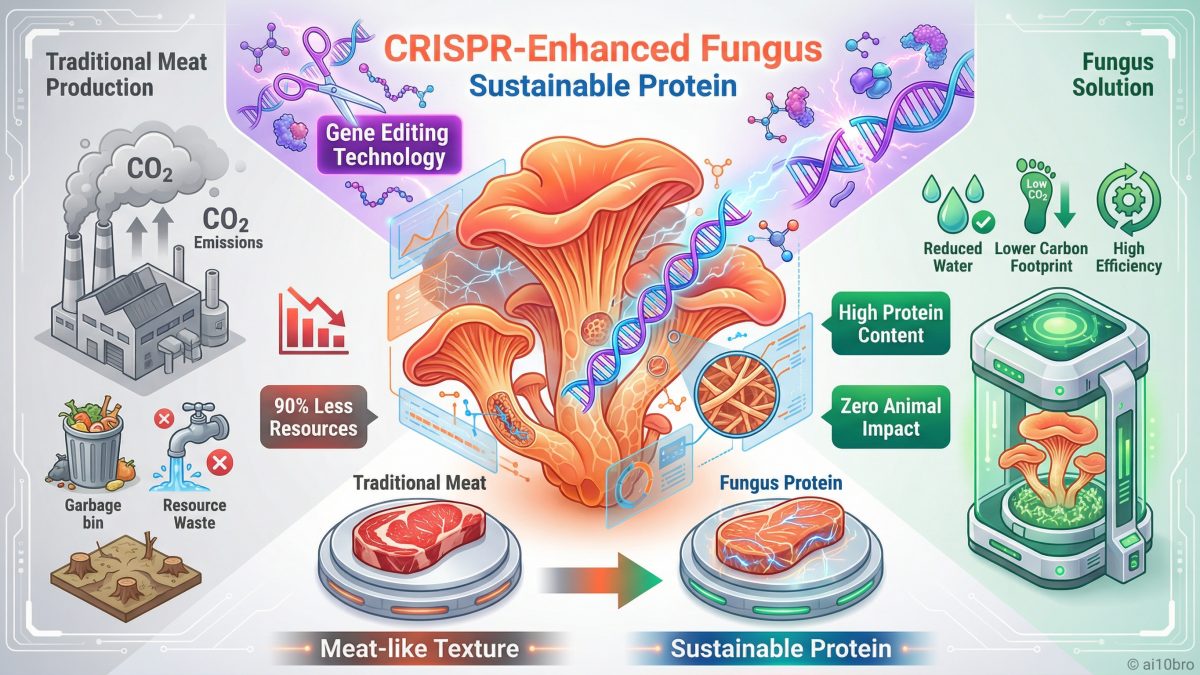
Deep Dive: CRISPR-Fungus Technology Paves Way for Sustainable Protein Sources
A breakthrough in genetic engineering uses CRISPR technology to modify fungi into a protein-rich, meat-like alternative. This deep dive explores…
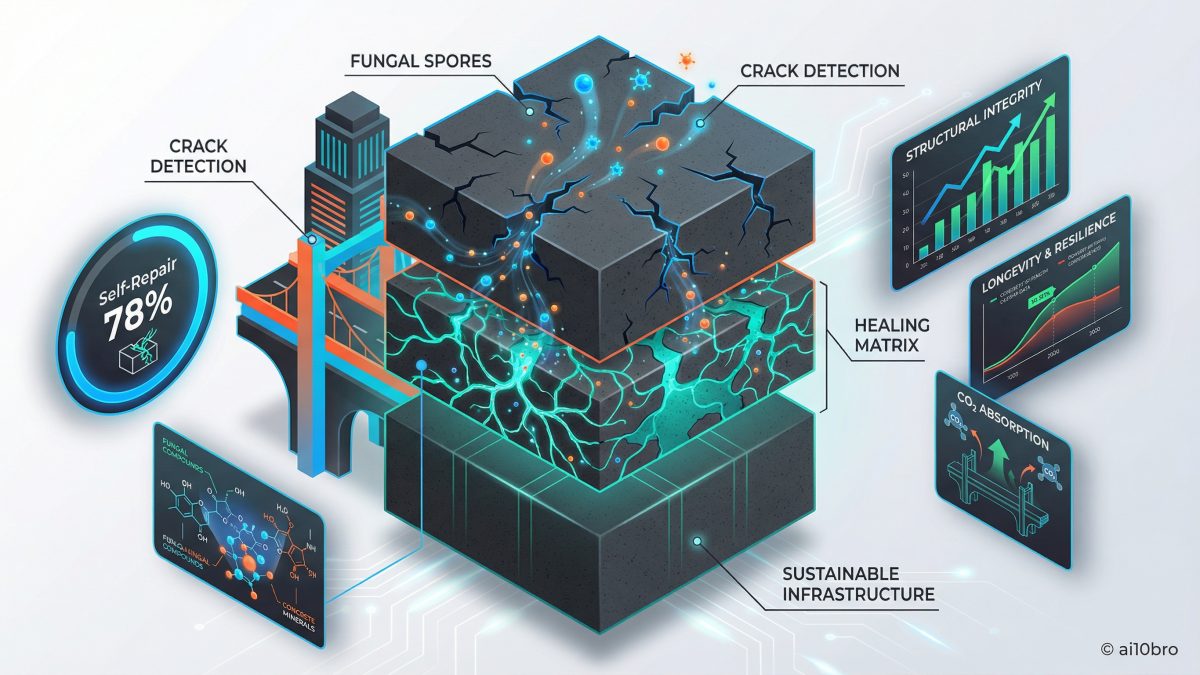
Deep Dive: The Potential of Fungi-Based Self-healing Concrete in Infrastructure Repair
This deep dive explores how self-healing fungi concrete offers a sustainable solution for repairing aging infrastructure. By analyzing its technical…