First Successful Treatment for Huntington’s Disease Marks a Historic Milestone

In what can only be described as a groundbreaking leap in medical science, UniQure, a leading biotech company specializing in genetic therapies, announced the first-ever successful treatment for Huntington’s disease. This milestone not only holds promise for individuals suffering from this debilitating neurological disorder but also underscores the transformative potential of bio-innovations.
Overview
UniQure’s innovative gene therapy has shown significant efficacy in reducing the progression of symptoms associated with Huntington’s disease, based on data from their pivotal Phase III clinical trial. The company plans to apply for regulatory approval in the United States and Europe soon. This breakthrough is particularly noteworthy as it marks the first time a treatment approach has been able to effectively manage this hereditary condition.
Context & Significance
The impact of Huntington’s disease extends beyond the individual, affecting families and communities on a profound level. With an estimated 30,000 individuals in the United States alone living with Huntington’s disease, the economic burden is significant, reaching into billions annually.
This treatment opens up new avenues for medical research and development, potentially leading to breakthroughs in other genetic disorders. The involvement of governmental bodies such as NIH (National Institutes of Health) and NSF (National Science Foundation) in funding this research underscores the importance of public-private collaborations in driving bio-innovations forward.
How It Works
The therapy involves a precise surgical procedure where a modified virus, known as AAV9, is delivered to specific parts of the brain called the putamen. This vector carries instructions to disrupt the production of mutant huntingtin protein, which accumulates in neurons and leads to their degeneration.
UniQure’s method differs from traditional gene therapies by targeting only the faulty gene responsible for Huntington’s disease while leaving other genetic material intact. This approach minimizes potential side effects and ensures that treatment is focused on correcting the root cause of the disorder.
Real-World Applications
The success of this therapy paves the way for personalized medicine, where treatments are tailored to the specific genetic makeup of patients. Companies in both pharmaceutical and biotech sectors have already expressed interest in adopting similar gene-editing techniques for other neurodegenerative diseases.
On a broader scale, this development could lead to cost savings by reducing hospital admissions and improving quality of life for affected individuals, thereby impacting healthcare systems globally. The timeline for broader adoption is expected within the next 5-7 years, pending regulatory approval and further clinical trials.
What’s Next
The immediate next steps involve securing FDA and EMA (European Medicines Agency) approvals, which could take up to two years. UniQure will also be expanding their research to explore the long-term effects of this therapy on patients’ neurological health.
Looking ahead, experts suggest that this breakthrough in treating Huntington’s disease may accelerate advancements in gene therapies for other neurodegenerative conditions such as Alzheimer’s and Parkinson’s diseases. However, challenges remain, including scaling up production and ensuring equitable access to treatments worldwide.
Related Insights

Fat Cells Reprogrammed to Starve Cancer Cells of Nutrients
UCSF researchers have discovered a method that repurposes fat cells into cancer-fighting agents by starving tumor cells.
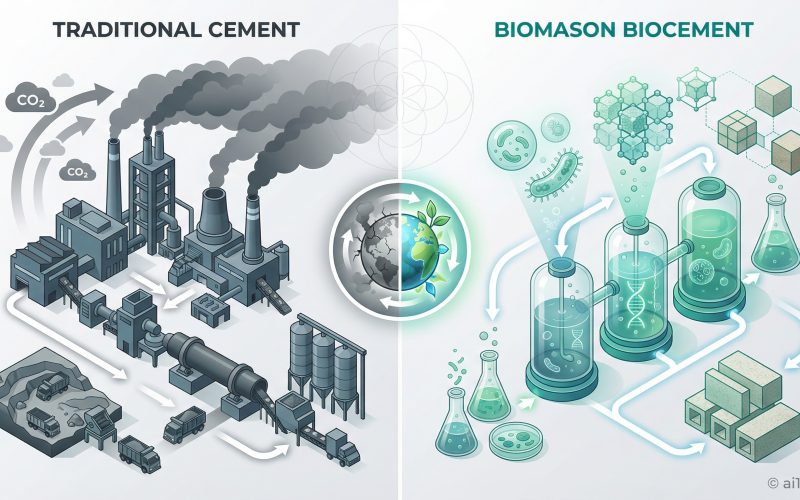
Biomason’s Biological Cement Paves the Way for Carbon-Free Construction
Biomason introduces a planet-friendly cement made through biological processes, eliminating carbon emissions in construction materials.
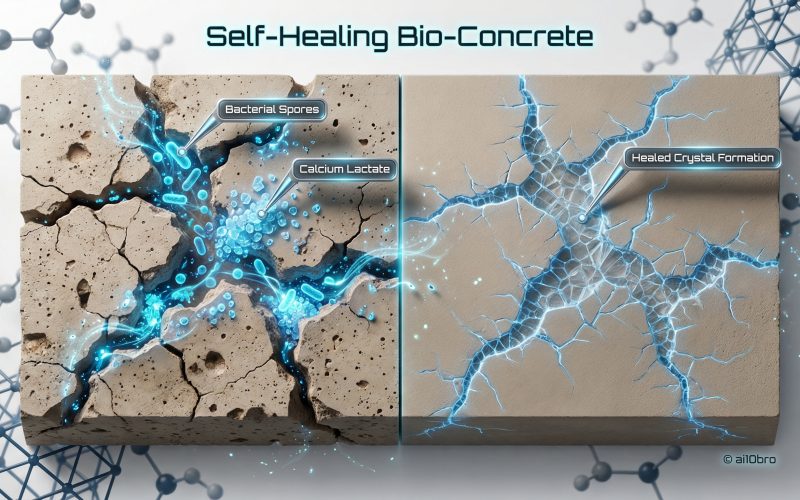
Self-Healing Concrete Uses Additives to Extend Infrastructure Lifespan
Self-healing concrete, a type of concrete that repairs cracks without human intervention, is poised to revolutionize construction and infrastructure projects.