Engineering Quorum Sensing in Anaerobic Bacteria Advances Synthetic Biology
Harnessing Communication to Build Better Bio-Innovations
In the realm of synthetic biology, one team has just made a groundbreaking leap forward by successfully engineering quorum sensing circuits in an obligate anaerobic Gram-positive bacterium. This marks a significant advancement over previous work that mostly focused on Gram-negative bacteria, opening up new avenues for biotechnological applications and furthering our understanding of microbial communication.
What Was Achieved
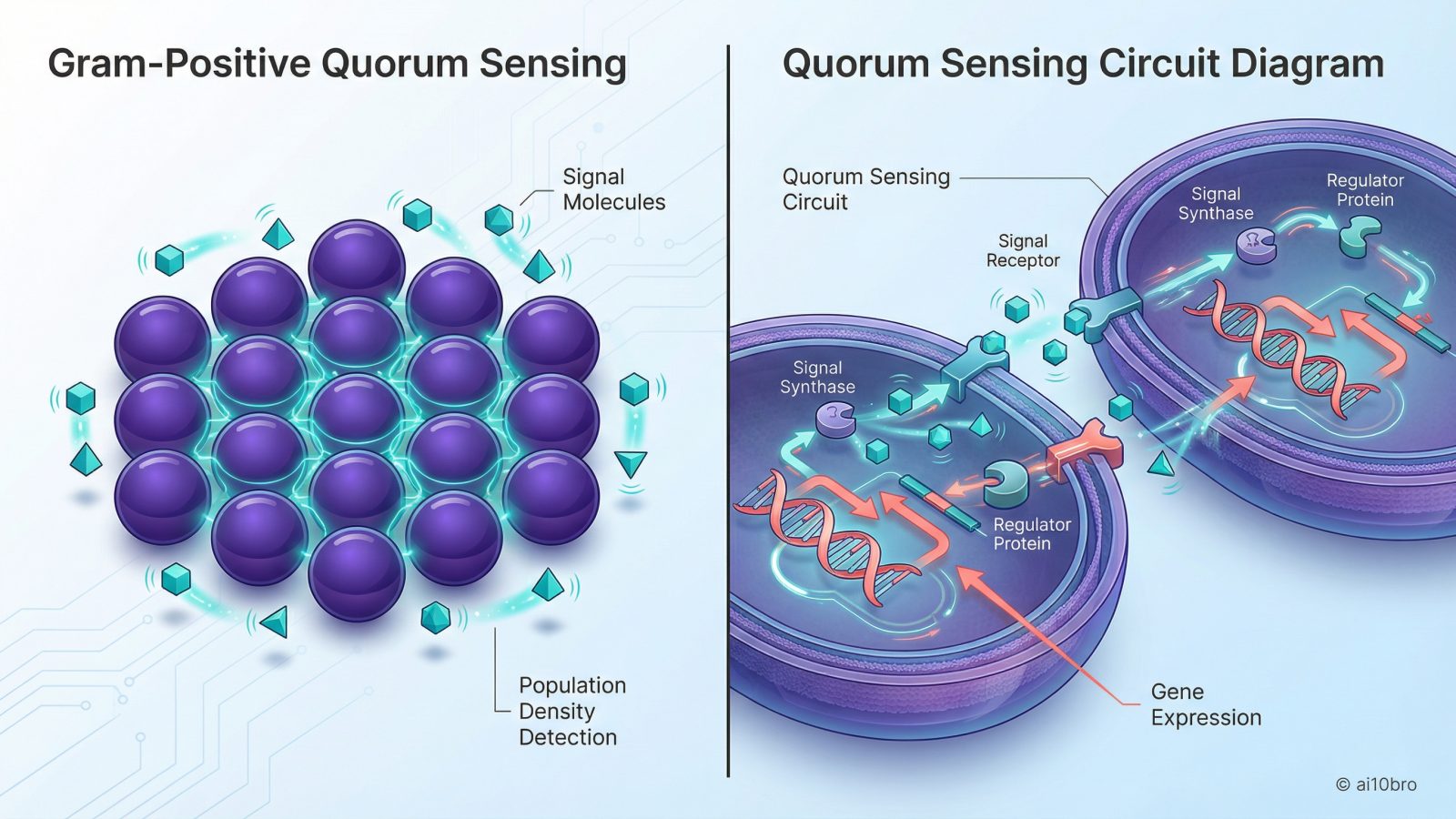
A group of researchers led by Sara Sadr at the University of Waterloo published their findings in a study titled “Construction and Functional Characterization of a Heterologous Quorum Sensing Circuit.” This work demonstrates that quorum sensing, a mechanism used by bacteria to communicate through chemical signals and coordinate gene expression based on population density, can be engineered into Gram-positive bacteria. Specifically, the team focused on an obligate anaerobic bacterium, which is typically found in environments without oxygen.
The Significance Beyond the Lab
This breakthrough has the potential to impact a wide range of industries, from bioremediation and biofuel production to drug delivery systems. The market for engineered bacteria-based applications is forecasted to reach over $10 billion by 2030, driven by advances in synthetic biology and increasing interest in sustainable solutions.
Previous limitations included the difficulty of engineering quorum sensing circuits specifically within Gram-positive bacteria due to their unique cellular structure. The ability to now manipulate these systems opens up new possibilities for tailoring bacterial behavior, especially under anaerobic conditions which are prevalent in many industrial and environmental settings.
How It Works
The process begins with the identification of specific genes that encode for quorum sensing mechanisms. These genes were then transferred into the obligate anaerobic bacterium, effectively creating a heterologous quorum sensing system. The team meticulously characterized the circuit’s functionality under various conditions to ensure its reliability and efficiency.
A key innovation lies in overcoming the challenges posed by the Gram-positive cell wall, which is significantly different from that of Gram-negative bacteria. This involved not only genetic modifications but also careful consideration of environmental factors that influence quorum sensing activity.
The team’s approach was methodical and systematic: they identified target genes, tested their function in a model organism (E. coli), and then transferred the successful system to the anaerobic bacterium. The result is a functional circuit that can be finely tuned for various applications, providing a modular framework for future bioengineering projects.
Real-World Applications
The immediate use cases span bioremediation (cleaning up contaminated environments), industrial fermentation processes, and advanced drug delivery systems where precise control over bacterial activity is critical. Companies such as Novozymes and Amyris are already exploring the potential of engineered bacteria for producing enzymes and biofuels.
Economically, the ability to engineer quorum sensing circuits in Gram-positive bacteria could reduce costs associated with industrial processes by increasing efficiency and reducing reliance on harsh chemicals or energy-intensive conditions. The timeline for broader adoption is likely within five years as more detailed studies confirm the system’s robustness across different environmental conditions.
What’s Next
The immediate next steps involve scaling up production and testing the engineered bacteria under real-world conditions to ensure reliability. Researchers are also looking into how these systems can be further optimized for specific applications, such as targeted drug delivery or specialized industrial enzymes.
This work fits seamlessly into broader sustainability goals by providing a versatile toolset for biotechnological innovation. Despite these advancements, challenges remain in ensuring the safety and regulatory compliance of engineered organisms. However, with ongoing research and development, the potential benefits far outweigh the initial hurdles.
Related Insights

Dynamic Pheromone Control Boosts Cordycepin Production in Cordyceps militaris
Researchers use pheromone-mediated quorum sensing to precisely control the biosynthesis of cordycepin, a promising nucleoside compound with broad pharmacological activities.

Engineers Unveil New Principles for lncRNA-Based Epigenetic Regulation
Researchers derive engineering principles for designing long non-coding RNAs to control chromatin states, opening new pathways in biomedical applications.

Modular Metabolite-Controlled Gene Expression Systems Developed
A new system allows precise control over gene expression through metabolites, offering a major leap in synthetic biology.