Engineered Bacteria Enhance Copper-Induced Cancer Therapy
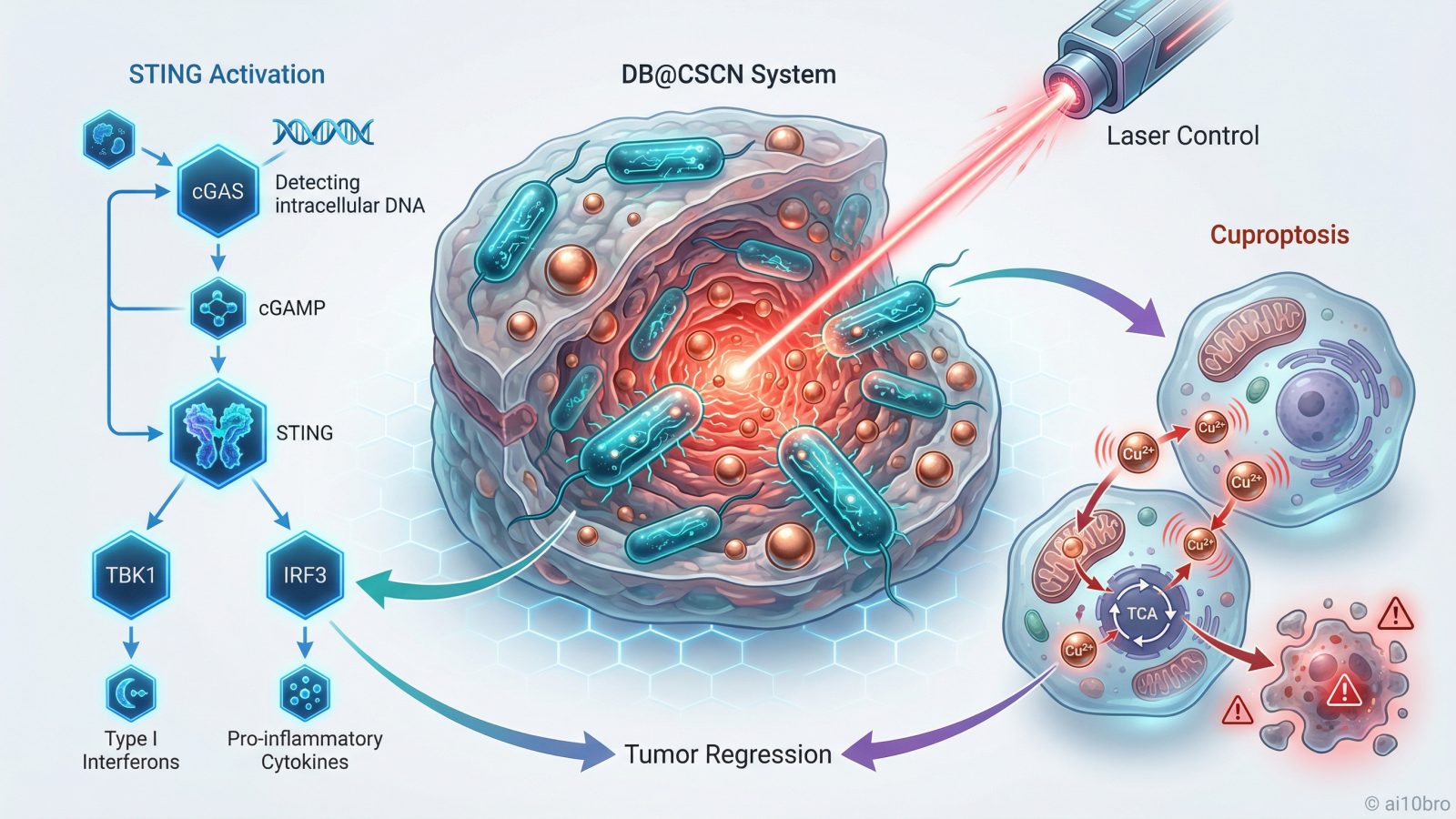
In a groundbreaking advancement in the field of biotechnology and immunotherapy, researchers have unveiled a novel biohybrid system designed to enhance the effectiveness of copper-induced programmed cell death (cuproptosis) against cancer. The team, led by Ruixin Kang at a leading institution, has engineered bacteria capable of delivering precise therapeutic interventions directly into tumor environments, significantly improving the treatment outcomes for patients.
Overview
The biohybrid system, dubbed DB@CSCN, integrates genetically modified Escherichia coli (E. coli) bacteria with Cu-SF nanoparticles to deliver therapeutic agents specifically targeting tumors. These bacteria are engineered to produce cyclic di-adenosine monophosphate (CDA), a potent activator of the STING pathway which plays a crucial role in immune response and tumor suppression.
Context & Significance
This breakthrough holds immense potential for transforming cancer treatment by overcoming limitations associated with traditional therapies. The global market for immunotherapy alone is expected to reach over $100 billion by 2030, highlighting the significant economic opportunity this technology presents. Previous methods often faced challenges related to tumor glycolytic metabolism and immunosuppressive environments; however, DB@CSCN addresses these issues through a targeted, spatiotemporal approach.
How It Works
The core innovation lies in the use of engineered E. coli bacteria, which are designed to produce CDA specifically within tumor regions. These bacteria are further functionalized with Cu-SF nanoparticles that ensure copper ions are released only when the bacteria reach their intended target—tumor cells. The hypoxic tropism feature of these bacteria allows them to selectively accumulate in tumors and release both copper ions and CDA upon stimulation by laser irradiation, thus inducing cuproptosis and activating the STING pathway for enhanced therapeutic outcomes.
Real-World Applications
This technology is poised to have a profound impact on cancer treatment strategies. Biopharmaceutical companies are already showing interest in this innovative approach, with several pilot studies underway to assess its efficacy in clinical settings. The potential for broader adoption and commercialization is significant, as it offers a more precise and effective method compared to conventional treatments.
What’s Next
The immediate next steps involve further refining the biohybrid system to optimize its delivery mechanism and therapeutic outcomes. Researchers are also exploring how this technology can be integrated with existing treatment protocols to maximize patient benefits. While there remains work to be done in overcoming regulatory hurdles and ensuring long-term safety, the potential of DB@CSCN in advancing cancer immunotherapy is undeniable.
Related Insights

Dynamic Pheromone Control Boosts Cordycepin Production in Cordyceps militaris
Researchers use pheromone-mediated quorum sensing to precisely control the biosynthesis of cordycepin, a promising nucleoside compound with broad pharmacological activities.

Engineers Unveil New Principles for lncRNA-Based Epigenetic Regulation
Researchers derive engineering principles for designing long non-coding RNAs to control chromatin states, opening new pathways in biomedical applications.

Modular Metabolite-Controlled Gene Expression Systems Developed
A new system allows precise control over gene expression through metabolites, offering a major leap in synthetic biology.