Optimized Phosphite Utilization in Synechococcus Promises Enhanced Biomanufacturing
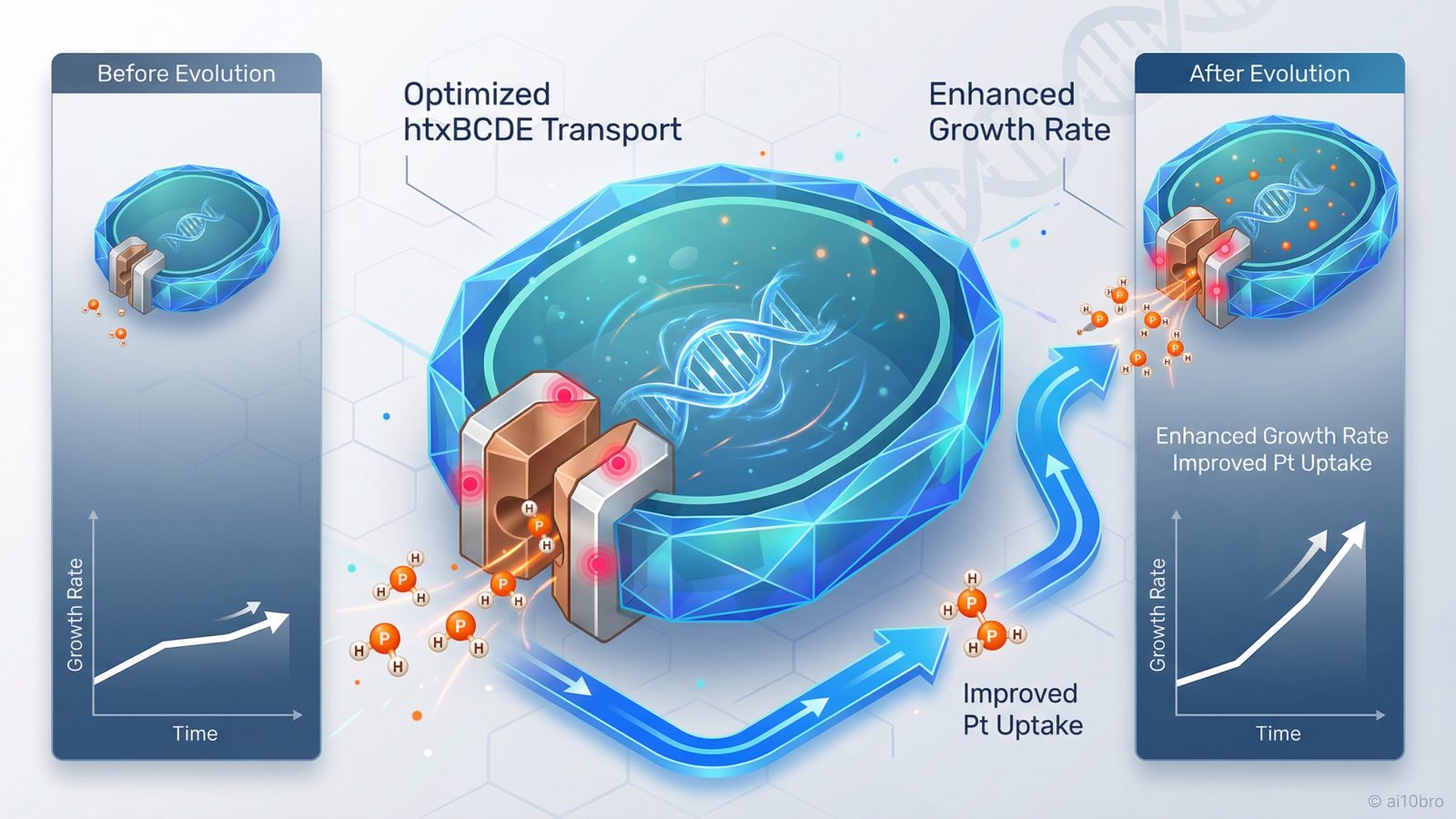
A team of researchers from Japan has unveiled a significant breakthrough in optimizing the phosphite (Pt) utilization pathway in Synechococcus elongatus PCC 7942. This achievement holds substantial promise for enhancing biomanufacturing processes by overcoming previous limitations associated with engineered microbial metabolism.
Overview
The study, led by Hiroki Murakami and colleagues from various institutions in Japan, focused on the adaptive laboratory evolution of Synechococcus elongatus PCC 7942, specifically strain RH714. The engineered phosphite utilization pathway in RH714 was previously hampered by growth retardation. However, through long-term serial passaging cultivation, the team observed notable improvements: not only did the growth rates increase, but the population also exhibited a higher rate of Pt consumption from the culture medium.
Context & Significance
This breakthrough is significant for several reasons beyond its experimental context. The ability to optimize microbial pathways without imposing metabolic burdens could revolutionize how we engineer organisms for biomanufacturing applications, such as producing biofuels and pharmaceuticals. Moreover, the estimated global market for cyanobacteria-based products was valued at $50 billion in 2024 and is projected to reach $75 billion by 2030, highlighting the economic opportunities that this research could unlock.
How It Works
The researchers introduced point mutations within the htxBCDE transporter genes, which are crucial for phosphite uptake. These genetic modifications were identified through sequence analysis of the passaged RH714 population and subsequently reintroduced into Synechococcus elongatus. This resulted in strains that could efficiently transport phosphite without suffering from growth retardation.
Key Innovations
The mutated htxBCDE cluster significantly enhanced phosphite transport activity, leading to a substantial improvement in both growth rates and phosphite consumption. Furthermore, the disruption of endogenous phosphate (Pi) transporter genes confirmed that these modified strains relied solely on phosphite for their nutritional requirements.
Real-World Applications
The potential applications of this research are vast and span multiple industries. In agriculture, engineered cyanobacteria could be used to produce fertilizer more efficiently. Biotechnology companies interested in sustainable bio-manufacturing processes will find these findings particularly relevant as they look for ways to optimize their production systems.
Timeline & Adoption
The transition from lab to commercial application is expected within the next five years, with pilot studies already underway at several research institutions. Companies such as Algenist and Synthetic Genomics are reportedly interested in leveraging this technology for industrial-scale applications.
What’s Next?
The immediate next steps involve scaling up the process to pilot levels and further refining the genetic modifications for even greater efficiency. The researchers plan to continue exploring how these optimized strains can be used to produce various bio-based products, aiming to contribute significantly to sustainable biomanufacturing practices.
Related Insights

Dynamic Pheromone Control Boosts Cordycepin Production in Cordyceps militaris
Researchers use pheromone-mediated quorum sensing to precisely control the biosynthesis of cordycepin, a promising nucleoside compound with broad pharmacological activities.

Engineers Unveil New Principles for lncRNA-Based Epigenetic Regulation
Researchers derive engineering principles for designing long non-coding RNAs to control chromatin states, opening new pathways in biomedical applications.

Modular Metabolite-Controlled Gene Expression Systems Developed
A new system allows precise control over gene expression through metabolites, offering a major leap in synthetic biology.