Bioengineered Factor VIII Variant Reduces Antibody Formation in Hemophilia A Treatment
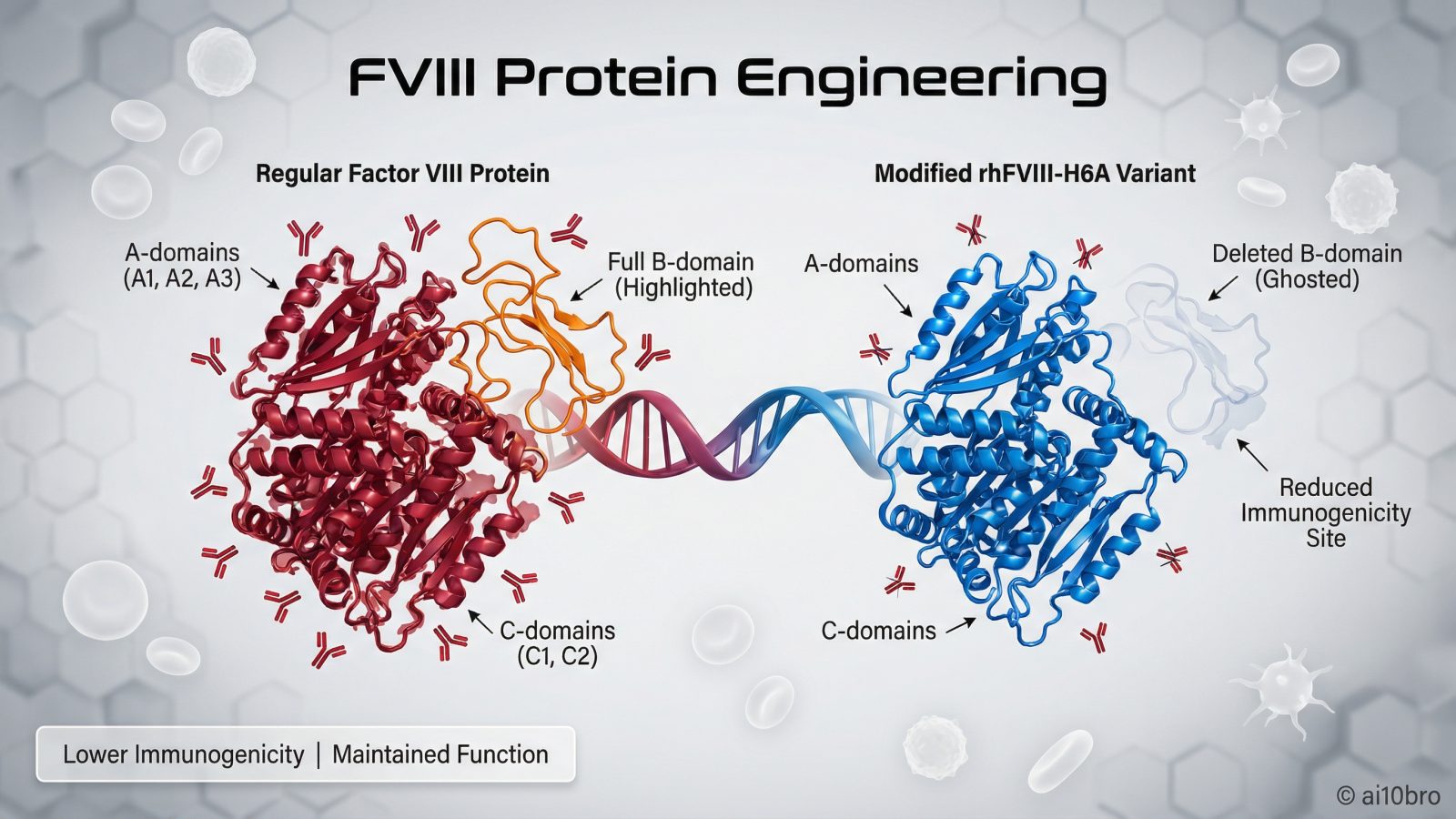
Researchers from Brazil have engineered a novel recombinant human factor VIII (rhFVIII-H6A) that significantly reduces the formation of neutralizing antibodies in mice with hemophilia A. This breakthrough promises to improve treatment efficacy and patient safety, addressing a critical challenge faced by those with this bleeding disorder.
Overview
In their study published in PubMed under the ID 41465517, Erika de Simone Molina and her team from the Universidade Federal do Rio Grande do Sul described the development of rhFVIII-H6A. This engineered variant is characterized by a B-domain deletion within its heavy chain (HCh), with the C-terminal segment of the deleted B-domain fused to the light chain (BΔ-LCh). When compared to traditional plasma-derived FVIII and other recombinant variants, treating hemophilic mice with rhFVIII-H6A demonstrated lower levels of anti-FVIII antibody formation. This includes a reduction in antibodies with inhibitory neutralizing activity.
Context & Significance
The significance of this discovery lies in its potential to revolutionize the treatment landscape for hemophilia A, a genetic disorder affecting approximately 1 in every 5,000 males globally. Current treatments often lead to immunogenic reactions where patients produce antibodies that neutralize the clotting factor VIII (FVIII), significantly reducing its efficacy and increasing the risk of bleeding complications.
Reducing these immunogenic responses could open up new avenues for more effective and safer treatment options, potentially saving lives and improving quality of life for hemophilia A sufferers. This development could lead to a multi-billion dollar market opportunity by 2030 as it addresses one of the primary challenges in managing this disorder.
How It Works
The bioengineered rhFVIII-H6A variant incorporates two key modifications that differentiate it from conventional FVIII treatments. First, a deletion in the B-domain within its heavy chain (HCh) removes potential antigenic sites, reducing the likelihood of antibody formation. Second, the fusion of the C-terminal segment of this deleted B-domain to the light chain (BΔ-LCh) enhances structural stability and function without compromising therapeutic efficacy.
Compared to plasma-derived FVIII and other recombinant variants, treatment with rhFVIII-H6A in a murine model showed significantly lower levels of anti-FVIII antibody formation. This includes antibodies that inhibit the clotting activity, which is crucial for preventing bleeding events in hemophiliacs.
Real-World Applications
The clinical application of rhFVIII-H6A could revolutionize the treatment of hemophilia A by reducing the risk of immune-mediated complications. This breakthrough would primarily benefit patients with hemophilia A who are at high risk for developing neutralizing antibodies, rendering conventional treatments ineffective.
Potential adopters include major pharmaceutical companies specializing in rare blood disorders and hematological products. Commercialization could begin as early as 2027 if clinical trials prove successful, potentially opening up new markets within the global hemophilia treatment sector valued at over $5 billion by 2030.
What’s Next
The next steps involve further preclinical testing to validate these findings in larger animal models and eventually move toward human clinical trials. These phases are crucial for demonstrating safety and efficacy before commercialization can be considered. Challenges remain, including regulatory hurdles and the need to establish manufacturing processes that ensure consistent quality and purity of rhFVIII-H6A.
This development aligns with broader trends in bioengineering aimed at enhancing therapeutic outcomes through precise genetic modifications. With continued research, this technology could pave the way for more personalized treatments, reducing treatment costs, and improving patient care across various hemophilic disorders.
Related Insights

Dynamic Pheromone Control Boosts Cordycepin Production in Cordyceps militaris
Researchers use pheromone-mediated quorum sensing to precisely control the biosynthesis of cordycepin, a promising nucleoside compound with broad pharmacological activities.

Engineers Unveil New Principles for lncRNA-Based Epigenetic Regulation
Researchers derive engineering principles for designing long non-coding RNAs to control chromatin states, opening new pathways in biomedical applications.

Modular Metabolite-Controlled Gene Expression Systems Developed
A new system allows precise control over gene expression through metabolites, offering a major leap in synthetic biology.