Bio-Engineered Skin Grafts Show Promising Results in Burn Patients
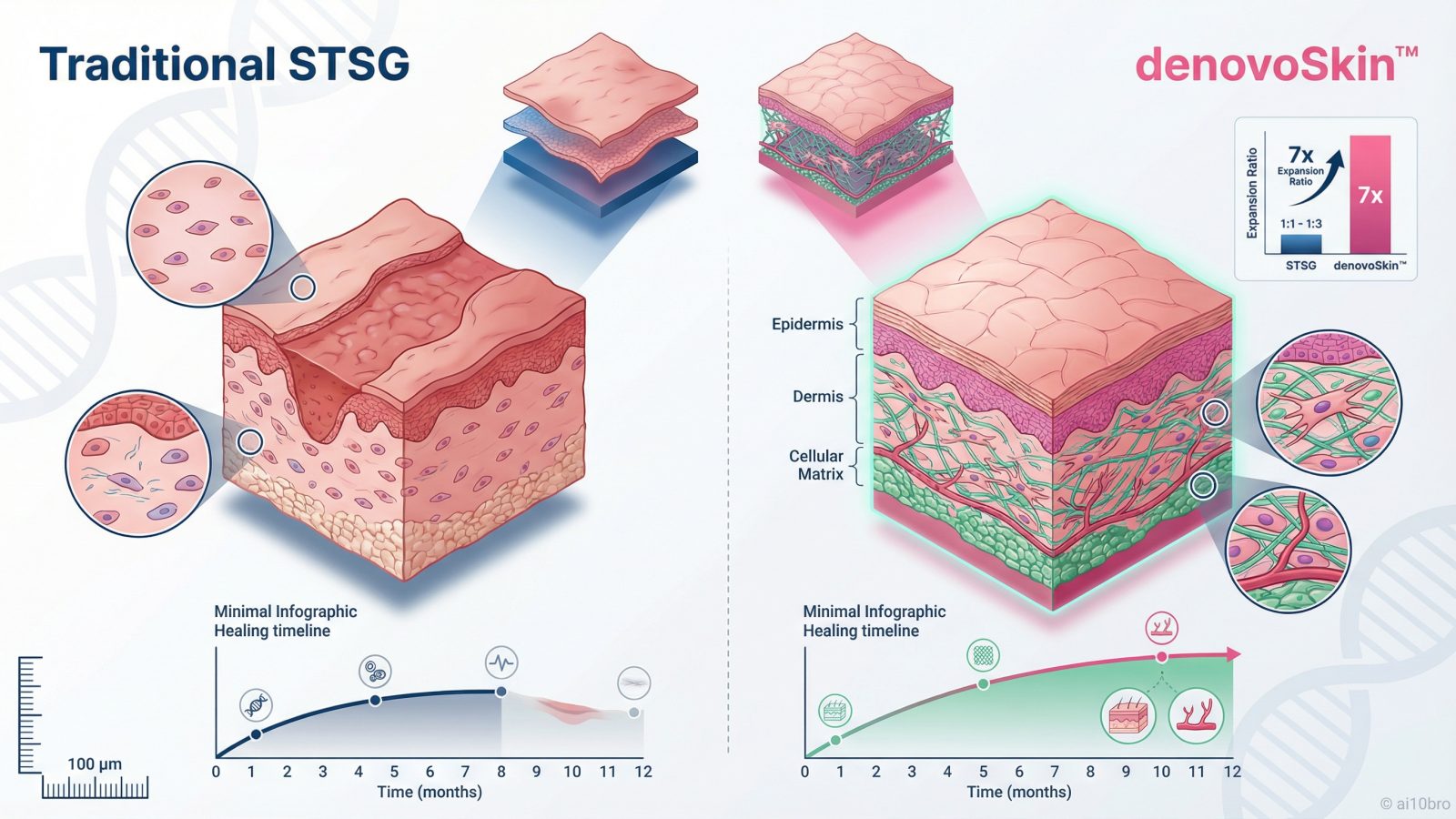
Researchers have achieved promising results with denovoSkin™, a bio-engineered autologous skin graft that shows high safety and efficacy in treating deep partial and full-thickness burns among adolescents and adults. This finding emerges from a phase IIb clinical trial published on PubMed by an international team led by Martin Meuli.
Overview
A multi-center, prospective, randomized controlled trial involving 21 patients between the ages of 12 and adulthood showcased the therapeutic role of denovoSkin™. Conducted across four sites in Switzerland, the Netherlands, and Italy from March 26, 2018, to July 26, 2022, the study compared this innovative bio-engineered skin graft with traditional split-thickness skin grafts (STSG). The research team included notable experts such as Clemens Schiestl, Fabienne Hartmann-Fritsch, and Cornelis H van der Vlies.
Context & Significance
This breakthrough addresses critical issues in burn surgery: the shortage of autologous donor sites for split-thickness skin grafts and severe scarring. With a $5 billion market by 2030, bio-engineered treatments offer significant potential not only for improving patient outcomes but also for reducing healthcare costs associated with long-term care due to extensive scarring.
The successful demonstration of safety and efficacy in this trial paves the way for widespread adoption within burn treatment protocols. The innovative grafts could significantly reduce dependency on donor sites, enhance healing outcomes, and improve the quality of life for patients suffering from severe burns.
How It Works
The denovoSkin™ process involves isolating keratinocytes and fibroblasts from a small biopsy taken from the patient. These cells are then expanded in vitro to create autologous dermo-epidermal grafts, which can be applied to wound sites. This method circumvents the need for extensive donor skin areas and reduces the risk of adverse immune reactions.
Compared to conventional STSG methods, denovoSkin™ offers several advantages: it can cover larger surface areas with less harvested material, allowing for faster recovery times and better cosmetic outcomes due to its ability to reconstruct both epidermal and dermal layers of skin. The trial results indicated no significant safety concerns, making this technology a promising alternative.
Real-World Applications
The potential applications extend beyond the immediate treatment of burn patients. Bio-engineered grafts like denovoSkin™ could also benefit individuals with chronic wounds or those requiring skin replacement for other dermatological conditions. Companies and institutions already showing interest include leading bio-tech startups and medical device manufacturers who are eager to integrate this technology into their product portfolios.
Commercialization is expected to proceed through clinical trials, regulatory approvals in various regions, and pilot programs in hospitals. The broader adoption timeline hinges on these steps, with the potential for significant market impact by 2030, particularly within the burn treatment sector and beyond.
What’s Next
The immediate next step involves further clinical trials to solidify the safety and efficacy data needed for regulatory approval. Once approved, denovoSkin™ could rapidly become a standard in burn care practices worldwide. Researchers will also focus on enhancing the manufacturing process to increase efficiency and lower costs.
Looking ahead, this innovation aligns with broader bio-innovation trends focused on personalized medicine and regenerative therapies. The goal is not only to heal burns but to set a precedent for advanced tissue engineering applications in other medical areas.
Related Insights

Dynamic Pheromone Control Boosts Cordycepin Production in Cordyceps militaris
Researchers use pheromone-mediated quorum sensing to precisely control the biosynthesis of cordycepin, a promising nucleoside compound with broad pharmacological activities.

Engineers Unveil New Principles for lncRNA-Based Epigenetic Regulation
Researchers derive engineering principles for designing long non-coding RNAs to control chromatin states, opening new pathways in biomedical applications.

Modular Metabolite-Controlled Gene Expression Systems Developed
A new system allows precise control over gene expression through metabolites, offering a major leap in synthetic biology.