Bioengineered Probiotics Target Fusobacterium Nucleatum in Colorectal Cancer Therapy
Harnessing Probiotics Against a Deadly Pathogen
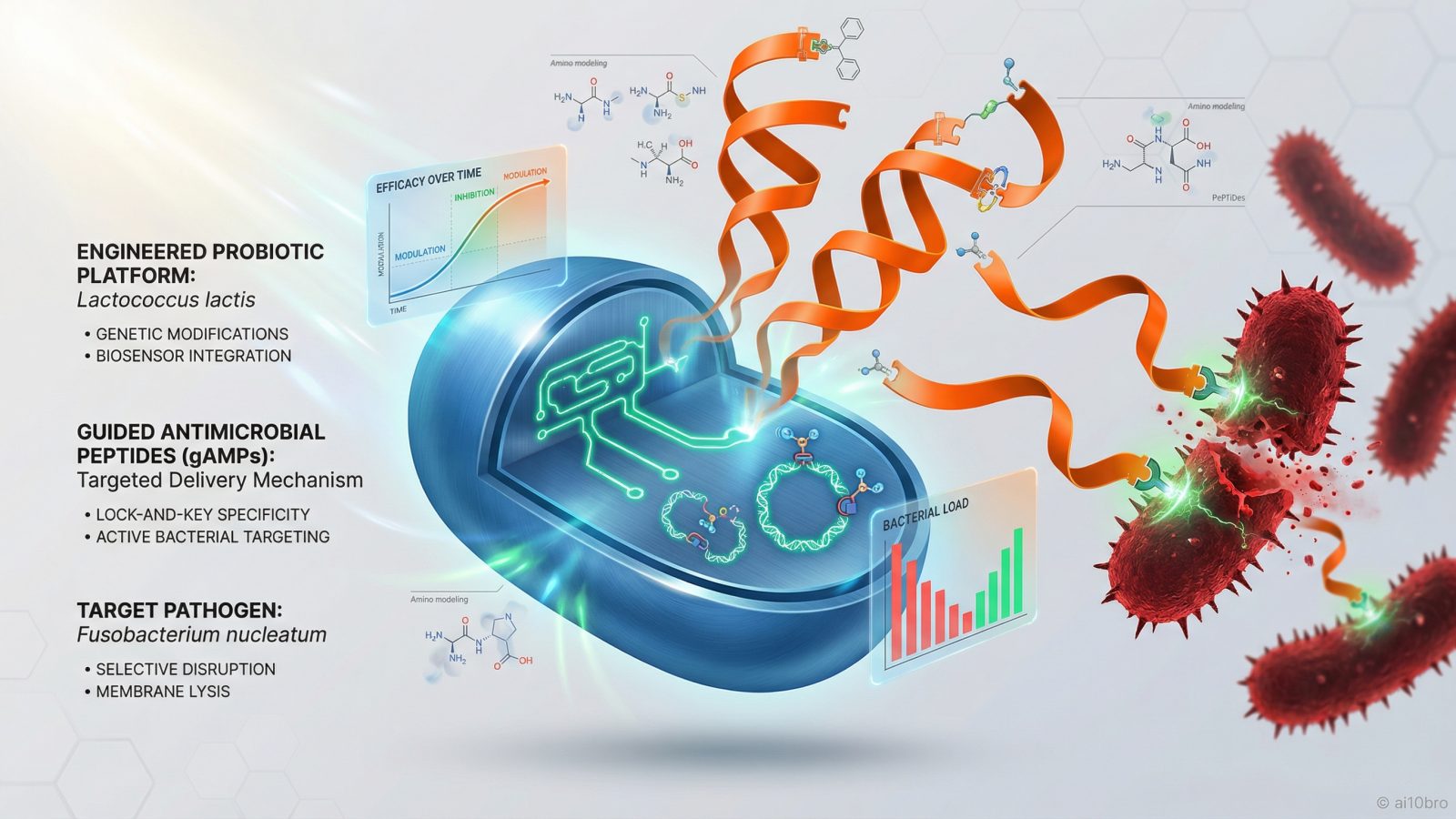
In a significant advancement in targeted therapies for colorectal cancer (CRC), a team of researchers has engineered probiotic bacteria that selectively inhibit the growth of Fusobacterium nucleatum, a bacterium linked to CRC progression. This breakthrough, published in PubMed under the ID 41368940 and led by Ankan Choudhury, Colin Scano, Allison Barton, Christopher M Kearney, and K Leigh Greathouse, employs bioengineered probiotics expressing guided antimicrobial peptides (gAMPs) to combat F. nucleatum with precision.
An Overview of the Breakthrough
The study leverages Lactococcus lactis MG1363, a well-studied bacterial strain known for its safety and versatility in bioengineering. By introducing genes that code for guided antimicrobial peptides (gAMPs) derived from Ovispirin and Cathelin-related peptide SCF, the team engineered probiotics capable of producing these gAMPs under specific conditions. The result is a targeted therapy against F. nucleatum, which has been implicated in up to 30% of colorectal cancer cases.
The Broader Impact on Cancer Treatment
This novel approach not only promises a new frontier in the treatment of colorectal cancer but also addresses the pressing issue of antibiotic resistance. By using probiotics engineered to target specific pathogens, this method minimizes collateral damage to beneficial gut bacteria and reduces the risk of promoting antibiotic resistance. The global market for CRC therapeutics is projected to reach $5 billion by 2030, indicating a significant economic opportunity for innovations like these.
The Mechanism Behind Targeted Inhibition
At its core, the therapy hinges on the synthesis of guided antimicrobial peptides (gAMPs). These peptides are designed to bind specifically with FomA, a membrane porin present in F. nucleatum, ensuring that the gAMPs can selectively target and inhibit this bacterium without affecting other gut flora. The bioengineered Lactococcus lactis MG1363 bacteria express these gAMPs under induction by nisin, a natural antimicrobial peptide. This targeted approach was found to be highly effective in vitro and in co-culture with polymicrobial communities.
Real-World Applications
The potential for this therapy extends beyond the lab into clinical settings, where it could offer a safer and more effective alternative to broad-spectrum antibiotics. Companies involved in probiotic research and development are already showing interest, with several planning pilot trials to assess its efficacy. The timeline for commercialization remains dependent on successful human trials and regulatory approval but holds promise as an innovative tool against colorectal cancer.
The Road Ahead
The next steps involve scaling up production of the bioengineered probiotics and conducting clinical trials to evaluate their safety and efficacy in patients. Looking ahead, this research opens doors for similar approaches targeting other pathogens involved in various diseases. Challenges remain, particularly around regulatory approval and ensuring long-term stability and effectiveness of the gAMP-producing probiotics. However, with sustained progress, this innovative therapy could play a significant role in advancing personalized medicine and contributing to broader bio-innovation goals.
Related Insights

Dynamic Pheromone Control Boosts Cordycepin Production in Cordyceps militaris
Researchers use pheromone-mediated quorum sensing to precisely control the biosynthesis of cordycepin, a promising nucleoside compound with broad pharmacological activities.

Engineers Unveil New Principles for lncRNA-Based Epigenetic Regulation
Researchers derive engineering principles for designing long non-coding RNAs to control chromatin states, opening new pathways in biomedical applications.

Modular Metabolite-Controlled Gene Expression Systems Developed
A new system allows precise control over gene expression through metabolites, offering a major leap in synthetic biology.