Bioengineering Advances Tendon Repair with Dermal Fibroblasts
HOOK
Imagine a future where repairing tendons is as simple and effective as utilizing skin cells. Researchers have made significant strides in this direction with an innovative bioengineering technique.
Oversight of the Breakthrough
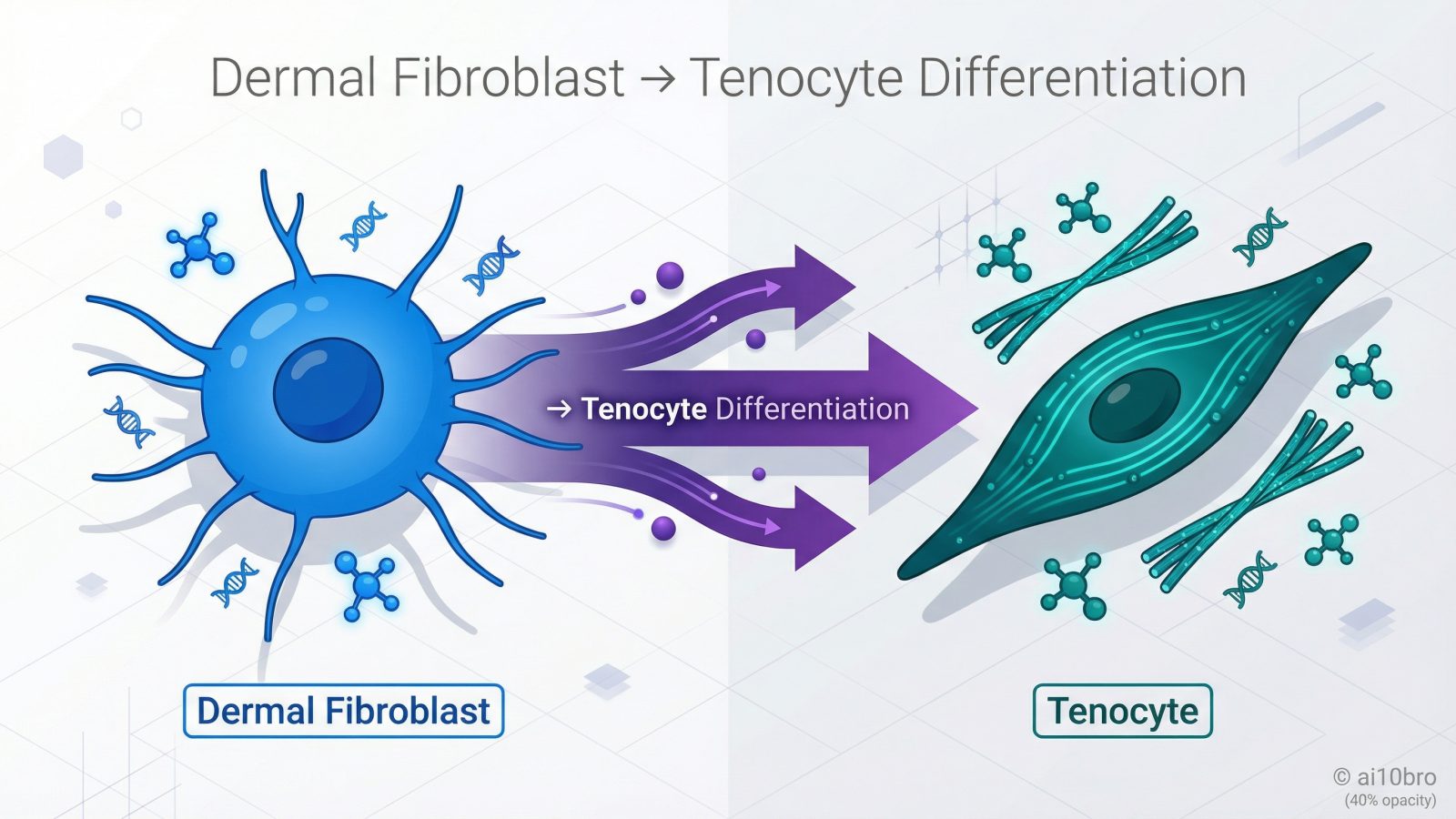
A team led by Adrian Djalali-Cuevas at the European Union has successfully engineered a method to maintain tenocyte phenotype and direct dermal fibroblasts towards a tenogenic lineage. This discovery could revolutionize how tendon injuries are treated, offering hope for more effective regenerative therapies.
Context & Significance
This breakthrough holds significant potential for the $30 billion global musculoskeletal disease market by 2030. Tendon injuries often lead to prolonged recovery times and functional limitations, impacting millions worldwide. By directing dermal fibroblasts towards tenogenic lineage, this technique offers a more natural and efficient repair mechanism compared to current treatments.
How It Works
The researchers employed multifactorial bioengineering methods that include the use of specific growth factors and mechanical stimuli. This combination creates an environment conducive for dermal fibroblasts to adopt a tenocyte-like phenotype, effectively transforming them into tendon cells.
Key steps in the process include:
- Growth Factor Application: Specific growth factors are applied to encourage the transformation of dermal fibroblasts into tenocytes.
- Mechanical Stimulation: Mechanical forces are used to mimic natural tendon loading, further guiding cell differentiation towards a tenogenic lineage.
This approach not only facilitates the maintenance of tenocyte phenotype but also ensures the cells perform their essential functions in repairing and regenerating damaged tendons more effectively than traditional methods.
Real-World Applications
The technique has immediate applications in orthopedic surgery, sports medicine, and physical therapy. Companies specializing in tissue engineering are already showing interest in the technology, aiming to develop new products for tendon repair and regeneration.
Potential use cases span from treating athletes with chronic tendinopathies to improving post-operative outcomes for patients undergoing tendon reconstruction surgeries. The economic implications include cost savings through reduced recovery times and the potential creation of a niche market dedicated to bioengineered tendon repairs.
What’s Next
The team plans to continue refining their techniques with an eye towards commercialization by 2035. Key milestones include conducting larger clinical trials and securing regulatory approvals for the technology’s use in human applications.
Further research will focus on enhancing the efficiency of cell transformation, reducing costs, and expanding the application scope beyond tendons to other connective tissues such as ligaments and cartilage. This work fits into broader bioengineering trends aimed at developing sustainable and effective biological solutions for medical challenges.
Related Insights

Dynamic Pheromone Control Boosts Cordycepin Production in Cordyceps militaris
Researchers use pheromone-mediated quorum sensing to precisely control the biosynthesis of cordycepin, a promising nucleoside compound with broad pharmacological activities.

Engineers Unveil New Principles for lncRNA-Based Epigenetic Regulation
Researchers derive engineering principles for designing long non-coding RNAs to control chromatin states, opening new pathways in biomedical applications.

Modular Metabolite-Controlled Gene Expression Systems Developed
A new system allows precise control over gene expression through metabolites, offering a major leap in synthetic biology.