Engineered Synthesis of Tunable Copolymers Opens New Biopolymer Frontiers
Engineering Breakthrough in Bioplastics
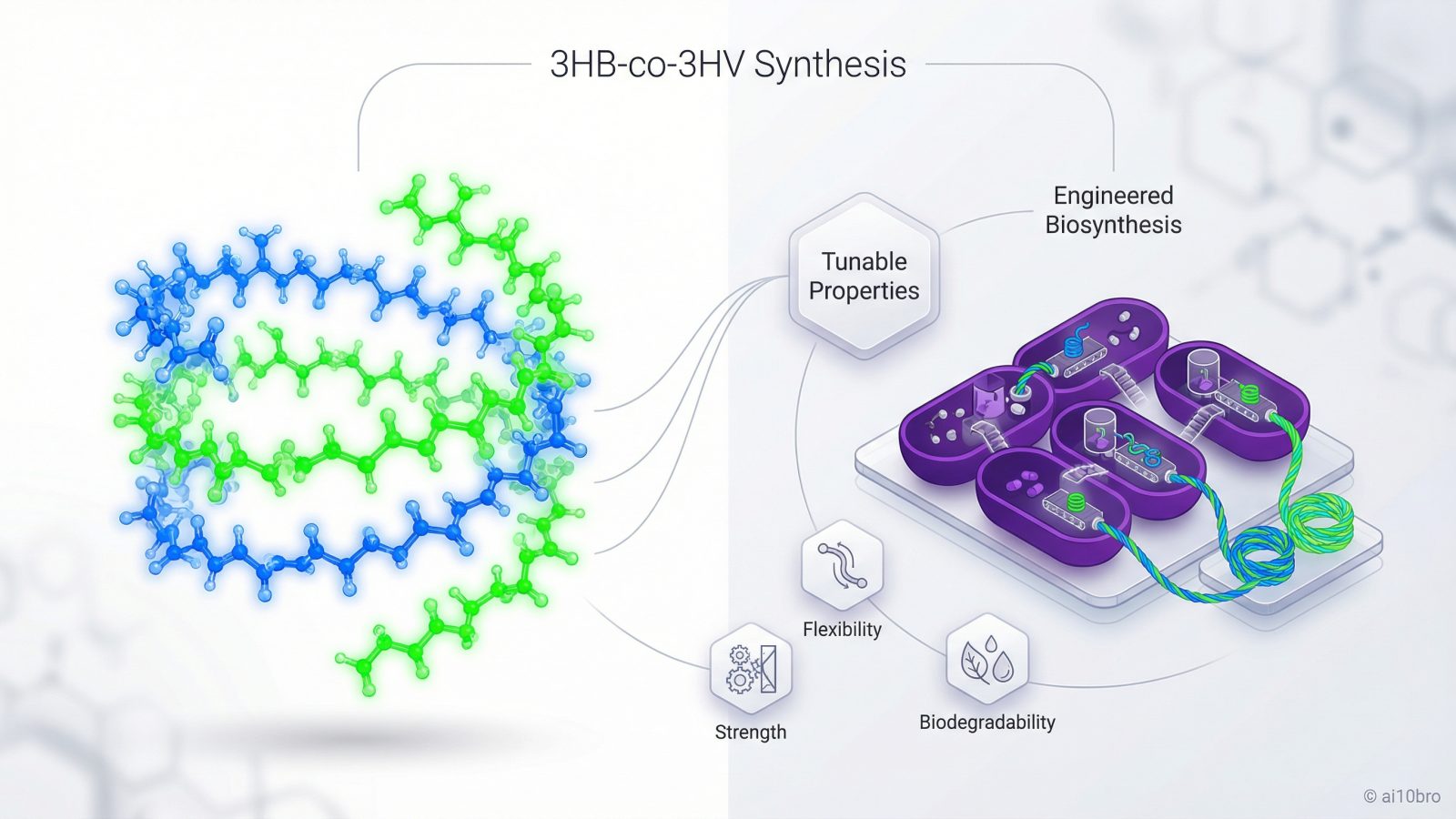
A team of researchers led by Guo-Qiang Chen has achieved a significant milestone in synthetic biology with their engineered synthesis of tunable copolymers comprising 3-hydroxybutyrate (PHB) and 3-hydroxyvalerate (P3HV). This breakthrough could significantly enhance the production and application of bioplastics, addressing one of the major environmental challenges of our time.
Overview
The research team successfully engineered microorganisms to produce a range of copolymers with varying compositions of PHB and P3HV. This tunability allows for the creation of materials with tailored mechanical properties, making them suitable for diverse industrial applications—from medical devices to packaging materials.
Published in 2026, this study involved collaboration between multiple institutions, with key contributors including Shaowei Li, Jinghui Wang, and Jiangnan Chen. The research represents a significant advancement over previous methods by allowing precise control of polymer composition, thus addressing limitations in uniformity and performance observed in earlier studies.
Context & Significance
The significance of this discovery extends beyond the laboratory into real-world applications that can help mitigate plastic pollution. Bioplastics are a critical component of sustainability efforts, offering an eco-friendly alternative to traditional petroleum-based plastics. With the global bioplastic market projected to reach $6.8 billion by 2030, advancements like these have considerable economic and environmental potential.
How It Works
The process involves genetic engineering of microorganisms such as E. coli. By modifying their metabolic pathways, researchers can control the ratio of PHB to P3HV in the resulting copolymers. This tunable approach allows for the production of materials with specific characteristics, including flexibility, tensile strength, and thermal stability.
Real-World Applications
The practical implications of this research are vast. Bioplastics produced through these methods can be used in industries ranging from healthcare to consumer goods. For instance, medical devices requiring biodegradable materials could benefit significantly from these advancements. Companies interested in sustainable packaging solutions may also adopt these technologies, reducing their environmental footprint.
What’s Next
The next steps involve scaling up the production process and testing the copolymers’ performance under various conditions. Commercialization is expected to follow if ongoing trials confirm initial findings. Researchers are optimistic that this technology will contribute significantly to broader sustainability goals, paving the way for more eco-friendly materials in everyday products.
Related Insights

Dynamic Pheromone Control Boosts Cordycepin Production in Cordyceps militaris
Researchers use pheromone-mediated quorum sensing to precisely control the biosynthesis of cordycepin, a promising nucleoside compound with broad pharmacological activities.

Engineers Unveil New Principles for lncRNA-Based Epigenetic Regulation
Researchers derive engineering principles for designing long non-coding RNAs to control chromatin states, opening new pathways in biomedical applications.

Modular Metabolite-Controlled Gene Expression Systems Developed
A new system allows precise control over gene expression through metabolites, offering a major leap in synthetic biology.