Engineering E. coli for Carbon Fixation: A Sustainable Metabolic Leap
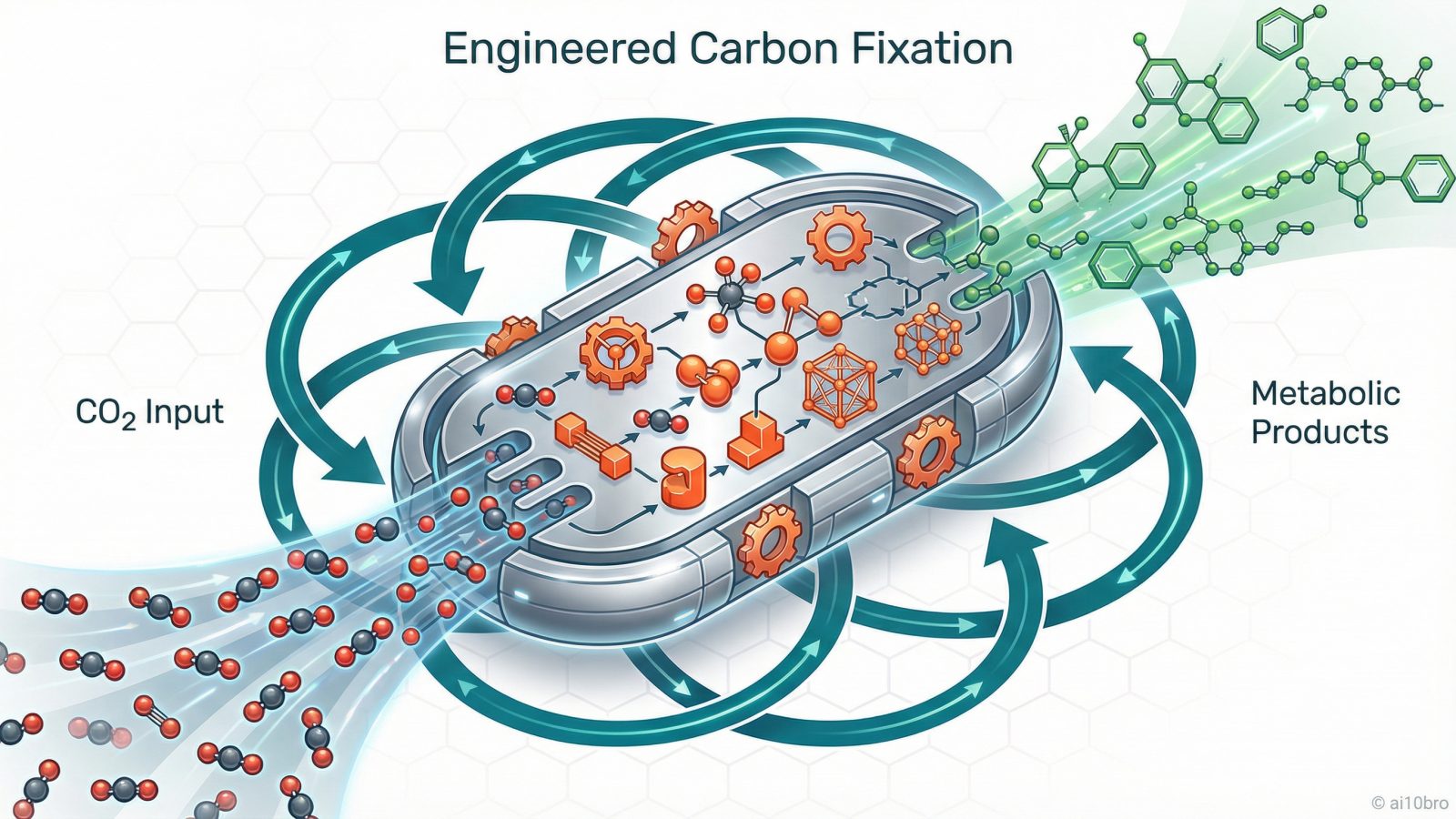
Scientists have achieved a significant milestone in synthetic biology by engineering the bacterium E. coli to incorporate a functional carbon-fixation pathway. This breakthrough, led by researchers including Yu Chen, Adam Burke, Vincent Chriscoli, Mengru Yang, Ping Chang, Tianpei Li, Buke Zhang, Royston Goodacre, and Lu-Ning Liu from various institutions, could revolutionize the way we produce raw materials and manage carbon dioxide (CO2) emissions.
Overview of the Discovery
The research team has successfully reprogrammed E. coli to integrate a carbon-fixation pathway, allowing the bacteria to convert CO2 into useful organic compounds. This metabolic engineering represents a significant step toward creating sustainable manufacturing processes that not only reduce environmental impact but also utilize atmospheric CO2 as a raw material.
The Significance and Context
This achievement is particularly relevant in the context of global efforts to combat climate change. By repurposing CO2 as a resource, this technology opens up possibilities for reducing reliance on fossil fuels and cutting carbon emissions. The market potential for such technologies is substantial; according to recent estimates, the bio-based chemicals market alone could reach $50 billion by 2030.
The breakthrough overcomes previous limitations in metabolic engineering where natural pathways were inefficient or absent in key industrial organisms like E. coli. The new pathway enables more efficient carbon fixation and integration into existing metabolic processes, significantly enhancing the bacterium’s capacity to produce valuable compounds from CO2.
How It Works: A Technical Breakdown
The research team engineered a functional carbon-fixation pathway in E. coli, which involves the introduction of enzymes that can capture and convert atmospheric CO2. By integrating these pathways, the bacteria can now utilize CO2 as an additional feedstock for producing organic compounds.
This engineering was achieved through a series of precise genetic modifications. The team identified key enzymes responsible for carbon fixation and integrated them into the E. coli genome. They also optimized gene expression levels to ensure that the pathway operates efficiently without disrupting other metabolic processes critical for bacterial survival.
Real-World Applications: From Lab to Market
The potential applications of this technology are vast, ranging from the production of biofuels and bioplastics to the development of novel pharmaceuticals. Companies in sectors such as chemical manufacturing, renewable energy, and healthcare could benefit significantly from these advancements.
While still in its early stages, the research is quickly moving toward pilot-scale testing. The team anticipates that within the next five years, their engineered E. coli strains will be ready for commercial deployment. This timeline aligns with broader trends towards sustainable manufacturing and carbon-neutral technologies.
What’s Next: A Path Forward
The immediate next steps involve further optimization of the metabolic pathways to enhance efficiency and robustness. The team is also exploring partnerships with industry leaders to develop commercial-scale applications. Challenges remain, particularly in scaling up production and ensuring long-term stability of the engineered bacteria under industrial conditions.
Ultimately, this technology represents a significant leap forward in sustainable bio-manufacturing and carbon management. By leveraging the power of synthetic biology, researchers are paving the way for a future where CO2 is not just an unwanted byproduct but a valuable resource.
Related Insights

Dynamic Pheromone Control Boosts Cordycepin Production in Cordyceps militaris
Researchers use pheromone-mediated quorum sensing to precisely control the biosynthesis of cordycepin, a promising nucleoside compound with broad pharmacological activities.

Engineers Unveil New Principles for lncRNA-Based Epigenetic Regulation
Researchers derive engineering principles for designing long non-coding RNAs to control chromatin states, opening new pathways in biomedical applications.

Modular Metabolite-Controlled Gene Expression Systems Developed
A new system allows precise control over gene expression through metabolites, offering a major leap in synthetic biology.