Engineering Terpene Synthases for Enhanced Diversity and Applications
HOOK
Innovative techniques are expanding the horizons of synthetic biology by enabling researchers to engineer enzymes that produce a vast array of natural compounds. Scientists at leading institutions have now developed methods to manipulate terpene synthases—enzymes critical for synthesizing terpenoids, one of nature’s most diverse and important groups of organic compounds.
OVERVIEW
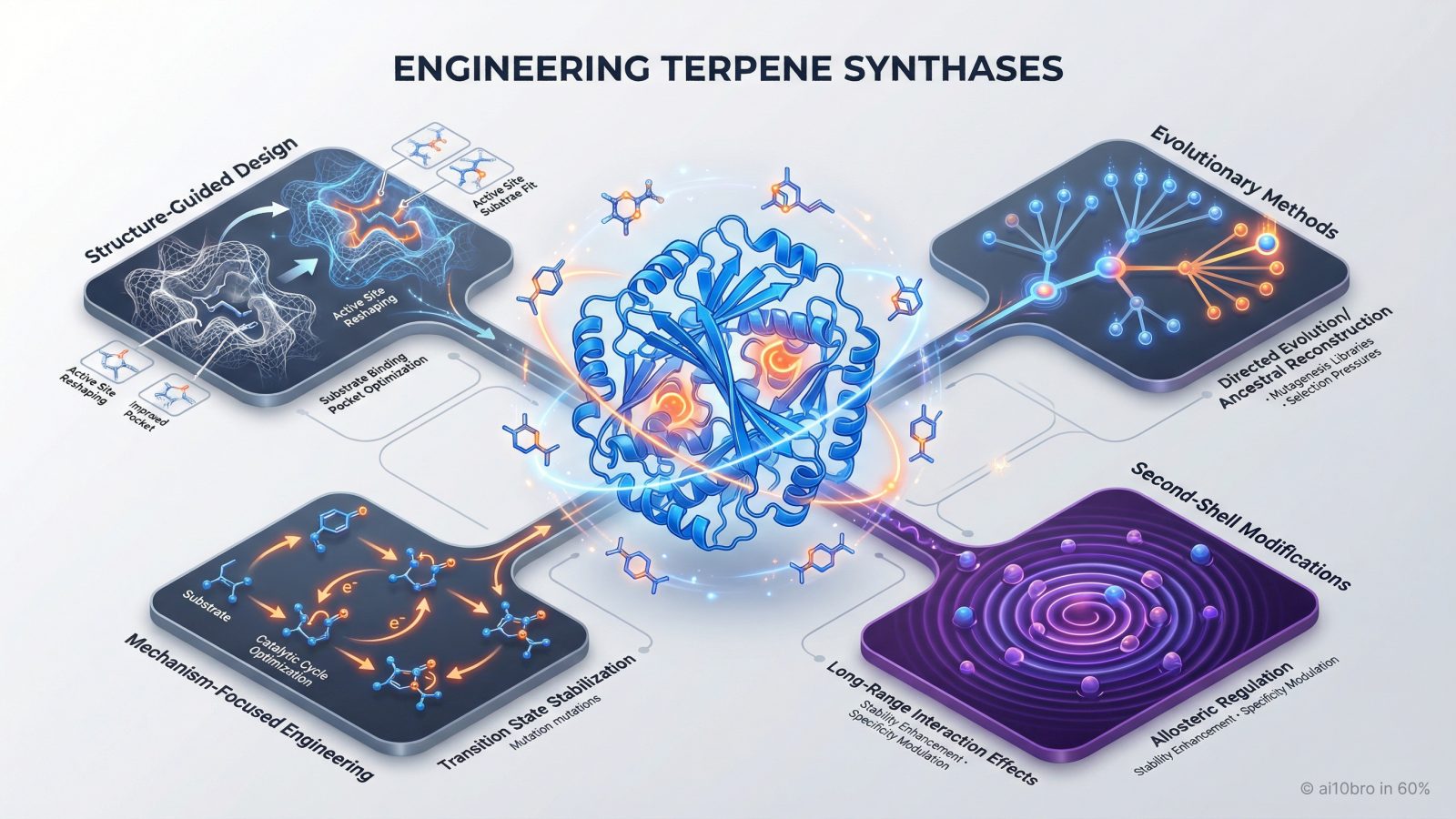
A team led by Xingming Pan, Haixin Li, and Liao-Bin Dong has published a comprehensive review on engineering class I terpene synthases to create new terpene skeletons. Their work highlights the potential for these engineered enzymes in diverse applications ranging from medicine to agriculture. By employing strategies such as structure-guided design, evolutionary methods, mechanism-focused engineering, and modifications extending beyond the active site, they are pushing the boundaries of what’s possible with synthetic biology.
CONTEXT & SIGNIFICANCE
The significance of this research extends far beyond the lab. Terpenoids have a substantial market presence in pharmaceuticals, fragrances, and agricultural chemicals valued at over $10 billion globally. Traditionally, these compounds are extracted from natural sources or synthesized using complex chemical processes. The ability to engineer terpene synthases for diverse skeletal frameworks could streamline production and lower costs while opening new avenues for drug discovery and crop improvement. This research also aligns with broader bio-innovation goals aimed at leveraging biological systems to create sustainable solutions.
HOW IT WORKS
The researchers employ a multifaceted approach to engineer terpene synthases, combining insights from structural biology, computational simulations, and diverse engineering techniques. By targeting the active sites of these enzymes using structure-guided design, they can manipulate specific carbocation intermediates crucial for catalysis. Evolutionary methods harness natural variation and phylogenetic insights, while mechanism-focused strategies control particular steps in the reaction pathway. Additionally, modifying regions beyond the active site through second-shell modifications allows further customization.
Key Innovations
The team’s innovative use of semi-rational and random mutagenesis techniques, such as alanine scanning and saturation mutagenesis, combined with directed evolution, provides a powerful toolkit for generating diversity. Computational models and high-throughput screening further enhance the efficiency of this process.
Challenges
The complexity of terpene synthase catalysis and weak sequence-function correlations present significant engineering challenges. However, by integrating multiple methodologies, researchers are steadily overcoming these obstacles to achieve more predictable and efficient enzyme modifications.
REAL-WORLD APPLICATIONS
This research has direct implications for various industries. In medicine, engineered terpenoids could lead to new drug formulations with enhanced efficacy and reduced side effects. The agricultural sector can benefit from tailored pest control agents or bioactive compounds that enhance crop resilience. Additionally, the fragrance industry gains access to a broader palette of natural aromas without relying on resource-intensive extraction methods.
Industry Adoption
Several biotech companies are already exploring partnerships and pilot projects to commercialize these innovations. With an expected timeline for broader adoption ranging from 3-5 years, the potential economic implications include significant cost savings in production and access to new markets.
WHAT’S NEXT
The immediate next steps involve refining current methodologies and expanding the application scope of engineered terpenoids. The commercialization process will likely begin with lab-scale demonstrations followed by pilot projects before scaling up for industrial use. Ongoing research into machine learning, mechanistic understanding, and advanced screening technologies aims to further enhance the capabilities and efficiency of these enzymes. Despite significant progress, challenges remain in fully predicting enzyme function from sequence alone, but continued advancements promise a bright future for this field.
Related Insights
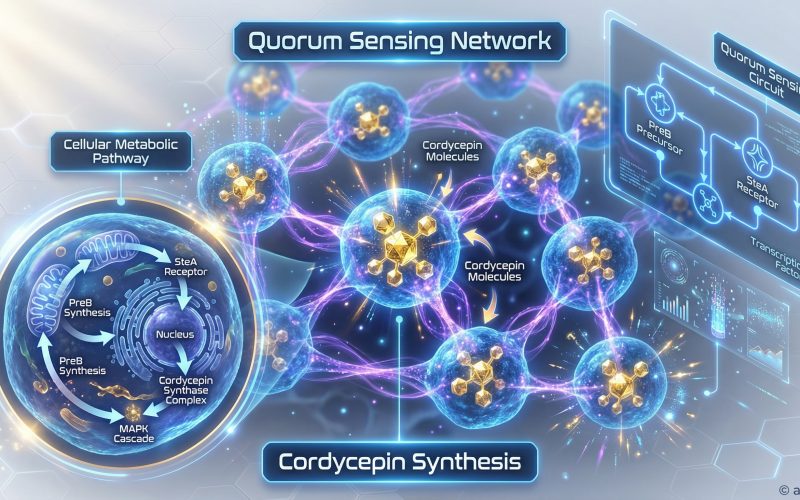
Dynamic Pheromone Control Boosts Cordycepin Production in Cordyceps militaris
Researchers use pheromone-mediated quorum sensing to precisely control the biosynthesis of cordycepin, a promising nucleoside compound with broad pharmacological activities.

Engineers Unveil New Principles for lncRNA-Based Epigenetic Regulation
Researchers derive engineering principles for designing long non-coding RNAs to control chromatin states, opening new pathways in biomedical applications.

Modular Metabolite-Controlled Gene Expression Systems Developed
A new system allows precise control over gene expression through metabolites, offering a major leap in synthetic biology.