Innovative Corneal Coating Shows Promise in Eye Tissue Preservation
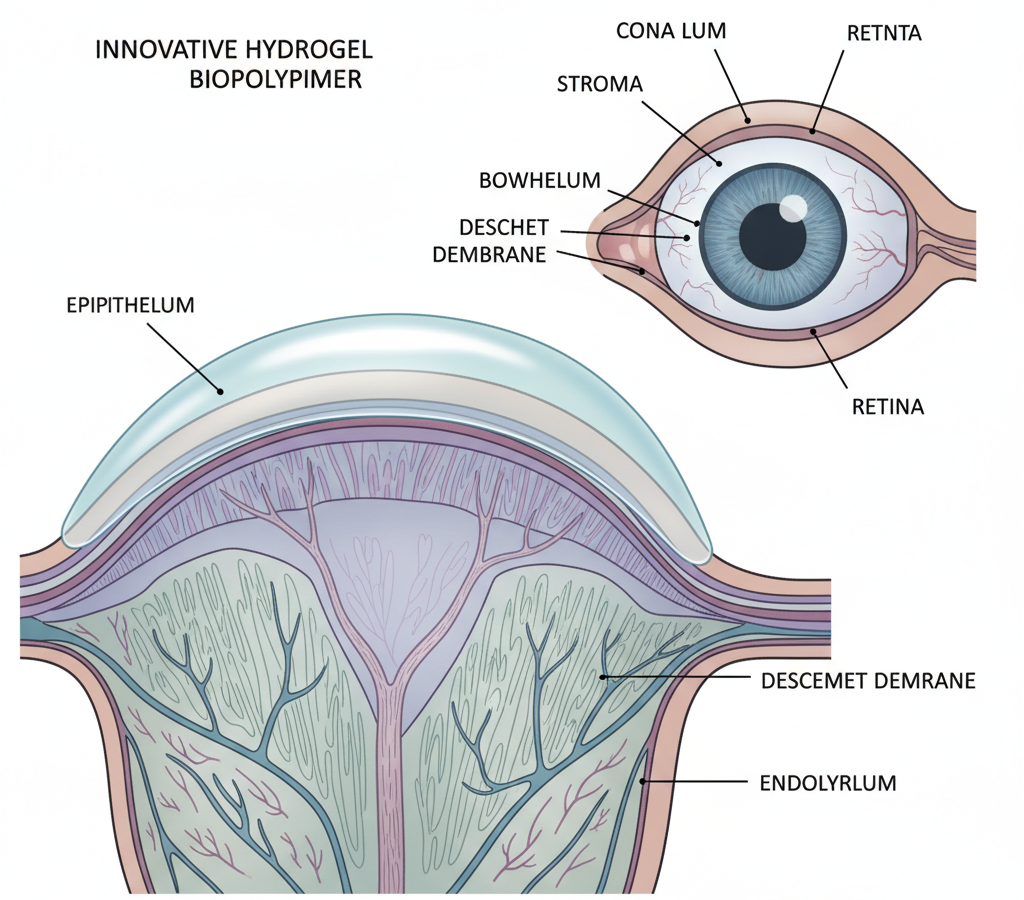
In a recent study published on PubMed, Russian researchers led by I N Grigoryeva explored the effects of applying a novel hydrogel biopolymer scaffold as a corneal coating. This innovative material, designed to enhance tissue restoration and regeneration, demonstrated remarkable results in preserving the integrity of eye structures.
Overview
The research team applied two thicknesses of the hydrogel scaffold—1.5 mm and 2.0 mm—to the anterior segment of rabbit eyes. Histological examinations conducted on days 3, 7, and 9 post-application revealed no significant structural changes in the anterior eye segments for both scaffold sizes except for minor epithelium thickening noted with the thicker (2.0 mm) scaffold.
Context & Significance
This study represents a substantial leap forward in bioengineering, particularly within ophthalmology. The ability to maintain or restore ocular tissue without causing adverse effects is paramount for surgical procedures involving corneal transplantation and other interventions that require prolonged healing periods. Currently valued at over $1 billion, the global market for advanced wound care solutions is expected to grow significantly as demand for effective, non-invasive treatments increases.
How It Works
The hydrogel biopolymer scaffold serves as a temporary support structure that facilitates tissue regeneration by providing a stable environment for cells to adhere and proliferate. In the study, this scaffold was applied in two thicknesses: 1.5 mm and 2.0 mm. Both versions demonstrated excellent biocompatibility, supporting high concentrations of substances needed for healing without causing structural alterations.
Key Innovations
The primary breakthrough lies in the scaffold’s design, which ensures minimal disruption to the eye’s natural architecture while promoting healing processes. Unlike traditional scaffolds that might cause inflammatory responses or interfere with vision, this new material maintains corneal clarity and preserves the integrity of critical layers such as the stroma and Descemet’s membrane.
Real-World Applications
The implications extend beyond laboratory settings into clinical practice. Ophthalmologists could utilize these hydrogel coatings during complex surgeries to protect delicate tissues from damage or infection, enhancing patient recovery times and outcomes. This technology can also be scaled up for broader applications in reconstructive surgery, potentially benefiting millions globally who suffer from ocular injuries.
What’s Next
The researchers plan to continue refining the scaffold’s properties, focusing on minimizing any epithelial thickening noted with the 2.0 mm thickness. Future studies will also explore long-term effects and suitability for human applications. This breakthrough aligns with broader trends in bioengineering aimed at improving quality of life through innovative medical technologies.
Related Insights

Dynamic Pheromone Control Boosts Cordycepin Production in Cordyceps militaris
Researchers use pheromone-mediated quorum sensing to precisely control the biosynthesis of cordycepin, a promising nucleoside compound with broad pharmacological activities.

Engineers Unveil New Principles for lncRNA-Based Epigenetic Regulation
Researchers derive engineering principles for designing long non-coding RNAs to control chromatin states, opening new pathways in biomedical applications.

Modular Metabolite-Controlled Gene Expression Systems Developed
A new system allows precise control over gene expression through metabolites, offering a major leap in synthetic biology.