InsiliCoil Software Suite Unveils New Avenues in Coiled Coil Engineering
Hook
Researchers have unveiled a powerful new tool that simplifies the creation and prediction of coiled coils—crucial protein complexes in cellular functions—from a molecular design perspective.
Overview
In 2025, researchers Jaiveer Arora and Jody M Mason published InsiliCoil: An Integrated Software Suite for Coiled Coil Design, Prediction, and Therapeutic Engineering. InsiliCoil is an innovative software suite designed to streamline the process of designing coiled coils with specific properties. The tool not only aids in predicting the stability and formation of these complexes but also offers insights into potential therapeutic applications, marking a significant advancement in synthetic biology.
Context & Significance
The ability to design and predict coiled coil structures is essential for understanding protein-protein interactions that underlie transcriptional regulation, signal transduction, and self-assembly. The global market for biologics alone was valued at over $300 billion in 2024, with the potential for substantial growth as precision medicine evolves. InsiliCoil’s introduction paves the way for more efficient drug discovery processes and targeted therapies.
How It Works
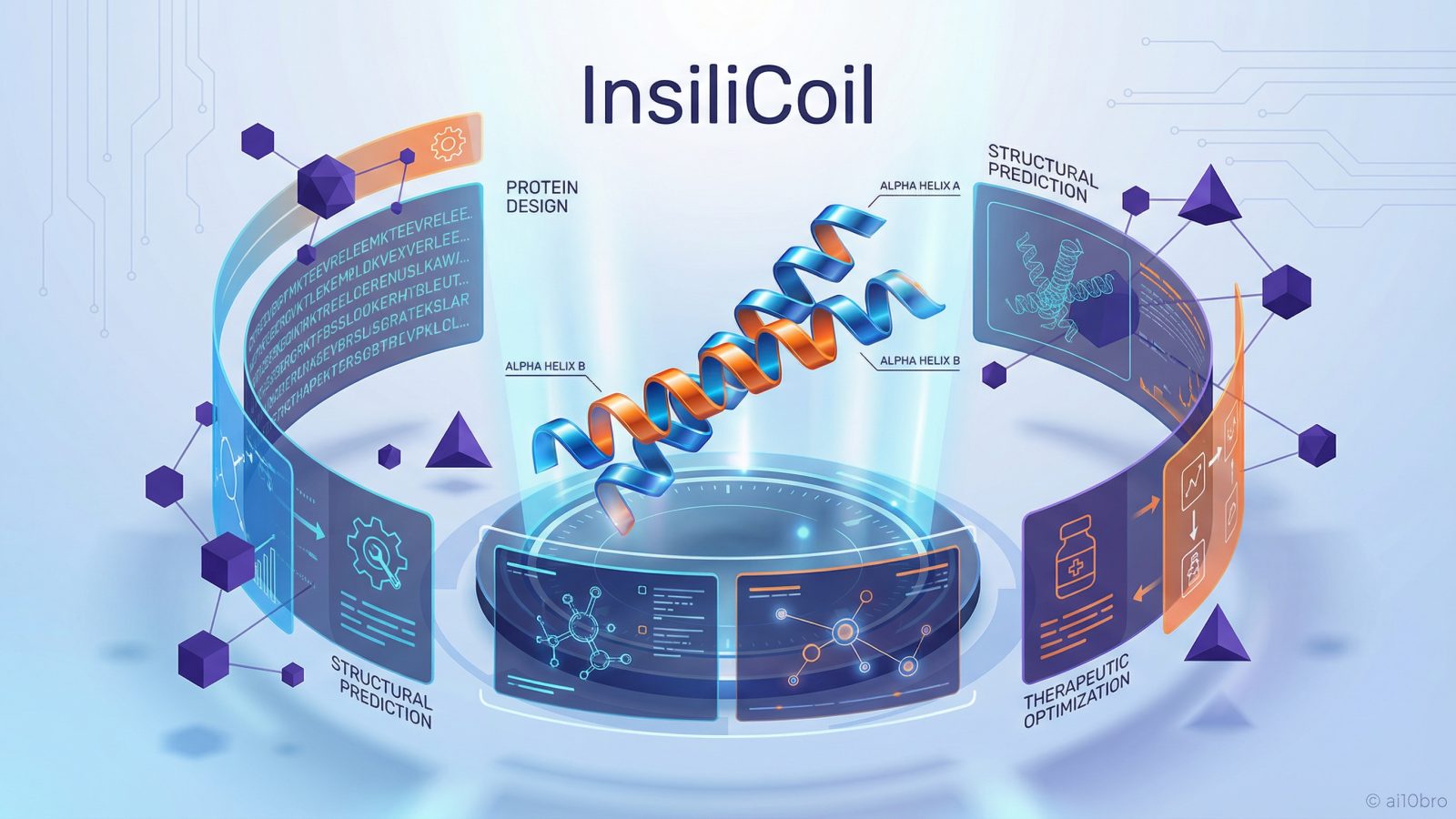
InsiliCoil integrates computational algorithms to design coiled coils with specific properties, predict their stability, and evaluate therapeutic potential. The software takes user-defined sequences and predicts the likelihood of forming stable coiled coil structures. This process involves:
- Sequence Design: Users can input desired amino acid sequences for coiled coil formation.
- Prediction Algorithms: Advanced algorithms predict the stability and interactions within the designed coiled coils.
- Therapeutic Engineering: The software evaluates the potential of these structures as therapeutic agents, assessing their affinity for specific target proteins.
The breakthrough lies in its ability to handle complex protein-protein interactions with greater accuracy than previous methods, making it a valuable tool for synthetic biologists and drug developers alike.
Real-World Applications
InsiliCoil has immediate applications in:
- Synthetic Biology: Facilitating the design of new biological circuits and devices for industrial biotechnology.
- Tissue Engineering: Assisting in the creation of biomaterials that mimic natural protein interactions for regenerative medicine.
- Drug Discovery: Optimizing lead compounds by predicting their interaction with target proteins, thereby enhancing drug efficacy and safety profiles.
The software is being adopted by several biotech firms interested in leveraging these advanced capabilities to accelerate their research and development pipelines. As it moves from the lab to pilot studies, InsiliCoil has the potential to revolutionize how we approach protein design and therapeutic engineering.
What’s Next
The immediate future for InsiliCoil involves further validation through real-world applications and expanding its use in academic research. The team plans to integrate more sophisticated models that can predict the behavior of coiled coils under various physiological conditions. Additionally, they aim to collaborate with pharmaceutical companies to validate therapeutic candidates derived from the software’s predictions.
The ultimate goal is to streamline the development process for new drugs and therapies, bringing innovative treatments to market faster than ever before while addressing some of the biggest challenges in biotechnology today.
Related Insights

Dynamic Pheromone Control Boosts Cordycepin Production in Cordyceps militaris
Researchers use pheromone-mediated quorum sensing to precisely control the biosynthesis of cordycepin, a promising nucleoside compound with broad pharmacological activities.

Engineers Unveil New Principles for lncRNA-Based Epigenetic Regulation
Researchers derive engineering principles for designing long non-coding RNAs to control chromatin states, opening new pathways in biomedical applications.

Modular Metabolite-Controlled Gene Expression Systems Developed
A new system allows precise control over gene expression through metabolites, offering a major leap in synthetic biology.