Synthetic Cells Communicate Through Microcompartments in Biomimicry Milestone
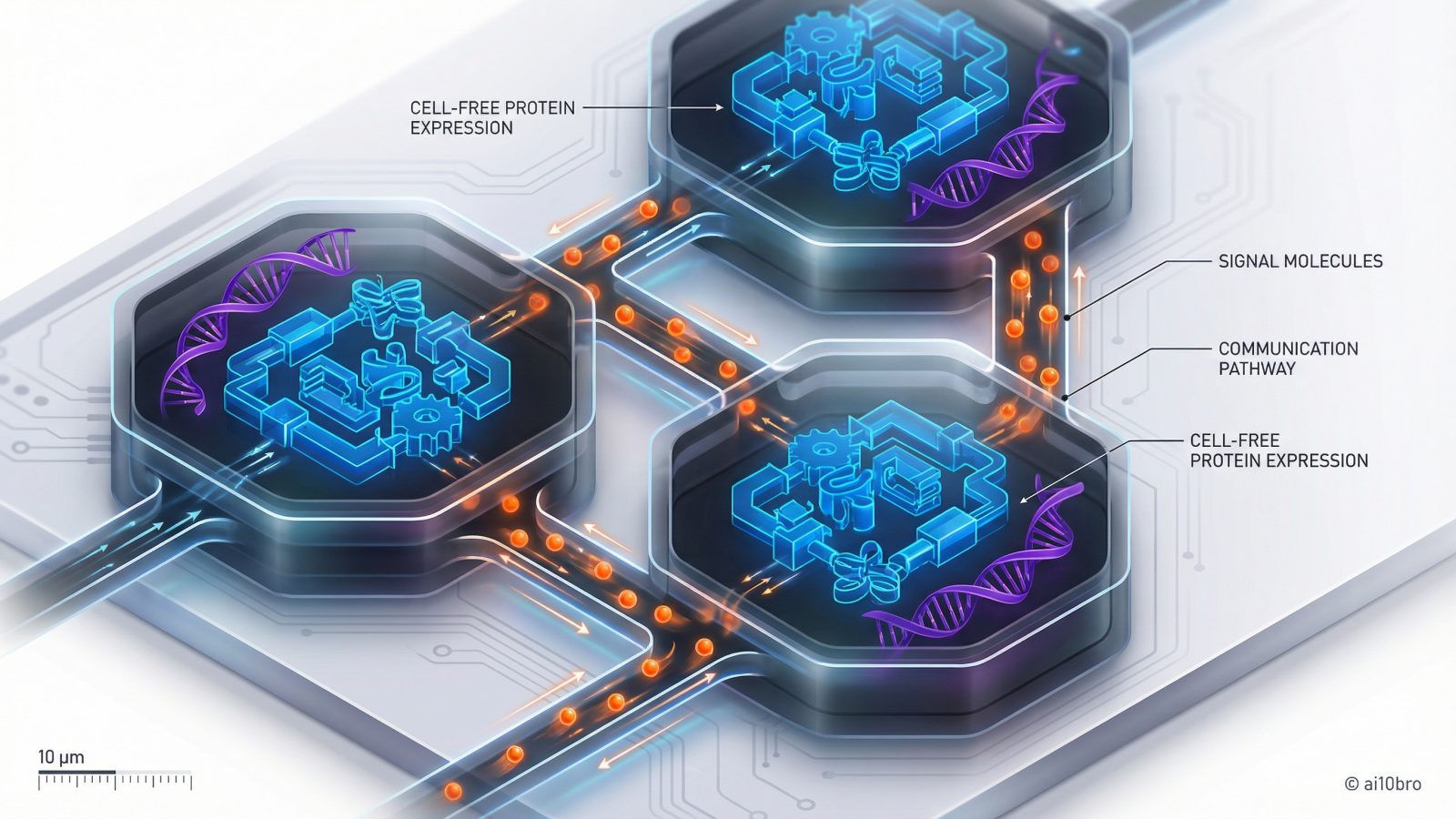
Imagine being able to program life at the cellular level, creating artificial biological units that can mimic natural processes and even communicate with each other—this is not just science fiction anymore. In an exciting development, researchers including Joshua Ricouvier have demonstrated how microfluidic techniques combined with cell-free protein synthesis systems can enable synthetic cells within microcompartments to send messages, a critical step toward the creation of programmable biological units.
Overview
The research, published in 2025, outlines advancements in bottom-up synthetic biology where scientists are building functional assemblies of synthetic cells. These cells can be as small as droplets or vesicles and utilize cell-free systems to synthesize proteins based on provided genetic instructions. The work by Ricouvier et al. focuses on the communication pathways that enable these synthetic units to interact, a process vital for distributing functions across an assembly of such artificial biological entities.
Context & Significance
This development holds immense potential beyond academic interest; it opens avenues for significant economic opportunities in biotech and pharmaceuticals. The ability to design and control communication between synthetic cells could lead to the creation of complex systems capable of producing therapeutic molecules, biofuels, or even materials that self-assemble into useful structures.
How It Works
The key innovation lies in combining microfluidic techniques with cell-free protein synthesis. By encapsulating a mix of enzymes, ribosomes, and other cellular machinery within droplets or vesicles, the researchers can simulate cellular environments without living cells. This allows for controlled expression of proteins encoded by synthetic DNA sequences.
Communication Channels
The communication between these microcompartments is achieved through various experimental setups that allow exchange of signaling molecules and genetic material. By altering the permeability, stability, and scalability of these compartments, scientists can fine-tune how information flows within these artificial cellular networks. This capability represents a significant leap from previous work where such interactions were more rudimentary or absent.
Real-World Applications
The immediate application areas are in drug discovery and production, biomanufacturing, and bioengineering projects that require precision control over biological processes at the cellular level. Companies like Ginkgo Bioworks and Synthace are already exploring similar technologies to enhance their offerings.
Cost and Market Potential
The cost savings from such a technology could be substantial, potentially opening up new markets worth billions by reducing reliance on traditional biological systems that require more complex infrastructure. The scalability of these microfluidic-based synthetic cells means they can be easily manufactured at scale, providing significant economic benefits.
What’s Next
The next steps involve refining the communication pathways and increasing their complexity to mimic natural cellular networks more closely. Researchers are also exploring how these systems could integrate with existing biotechnological processes, potentially leading to hybrid biological-computing platforms that leverage both living cells and synthetic units.
Related Insights

Dynamic Pheromone Control Boosts Cordycepin Production in Cordyceps militaris
Researchers use pheromone-mediated quorum sensing to precisely control the biosynthesis of cordycepin, a promising nucleoside compound with broad pharmacological activities.

Engineers Unveil New Principles for lncRNA-Based Epigenetic Regulation
Researchers derive engineering principles for designing long non-coding RNAs to control chromatin states, opening new pathways in biomedical applications.

Modular Metabolite-Controlled Gene Expression Systems Developed
A new system allows precise control over gene expression through metabolites, offering a major leap in synthetic biology.